Defining the Fruit
From The National Association Of Cider Makers “The voice of the UK’s cider makers”.
website: cideruk.com
Cider apple varieties are divided into four categories according to the relative proportion of acidity and tannin:
Sweet varieties are the blandest of the four categories, being low in both components. They are useful to blend with ciders from the more strongly flavoured varieties, which, by themselves, would be too extreme in taste and aroma to be palatable. Typical examples of sweet apples are Sweet Coppin, in use to a small extent, and Court Royal which was used extensively at one time but rarely used nowadays.
Bittersweet apples impart the characteristic flavour of English ciders; as the name implies they are low in acid and high in tannin. The latter is responsible for two sensations on the palate – astringency and bitterness. In the bittersweet apple, there is a whole range of combinations of these two characteristics, varying from little astringency coupled with intense bitterness to very marked astringency coupled with mild bitterness. Typical bittersweets are Dabinett, Yarlington Mill and Tremlett’s Bitter.
Sharp varieties, so called because the predominant characteristic is that of acidity, are encountered less frequently today, possibly because culinary fruit, which has a similar flavour balance, can be substituted for this class. There are, however, recognised full sharp cider varieties, two of which are Crimson King and Brown’s Apple.
Bittersharp is the fourth class of cider apple. These are fairly high in acid and tannin, although the latter component does not show the wide range of flavours exhibited by the bittersweet. Stoke Red is a good example.
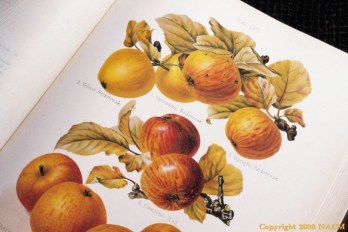
Image: 1860s Cider Apples from The Herefordshire Pomona. Illustrations by Miss Ellis and Miss Bull.
Image and definitions courtesy of NACM. Used by permission.

 UnitedStatesofCider