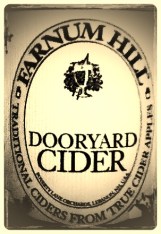
Great Cider Starts With Great Fruit.

We Like Cider.

And you can’t really like cider without being fairly keen on apples.

To quote the esteemed makers at Farnum Hill Cider & Poverty Lane Orchards:

Anywhere, in any words, great cider starts with great fruit.”

We Like Apples.

Expect more about apples – orchards, pollinators, varietals, history, tastings, fruit expression.

We Are Apple Drinkers.*

LOC apple image

*A nice turn of phrase from the always interesting American Orchard.

Cider Review: Farnum Hill Cider DOORYARD Batch 1202A: Cider52

FHillDooryard1202ACider: FARNUM HILL CIDER DOORYARD BATCH 1202A

Maker: Farnum Hill Cider & Poverty Lane Orchards   Origin:  Lebanon, New Hampshire

website: www.povertylaneorchards.com

ABV: 7.5%  Bottle: 750 ml, champagne cork

Makers Style Notes: What ARE Dooryard ciders?  “Lovely cider batches” that departed too much from the flavor profiles of established Farnum Hill Cider blends. The ongoing Dooryard series: experimental ciders, ranging from bittersweet to superfruity, that sell out quickly, never to be made again. “It’s a veritable feast of the weird and the wild,” according to Steve Wood, one of Farnum Hill Ciders founding makers.

Bonus Feature: Each keg or bottle of Dooryard Cider is marked with a batch number, allowing you to look up  the details of  your specific batches apples, blend, and tasting notes. It’s a glimpse behind the making process at Farnum Hill Cider, and a chance to read more about the people, processes, and  ideas involved in creating your batch of Dooryard Cider.

Fruit: Apples.

Cider Maker: Nicole LeGrand Leibon.

Makers Notes: Dooryard #1202A

Dooryard 12o2A jumps away from the ‘rowdier tannins’ that we forecast for the Dooryard tribe. The fruit notes cluster mostly in the peachy plummy stone-fruit family, but without sweetness. Prominent is a long smooth savory ‘umami’ woven throughout 1202A’s aromas and flavors, pleasurably escorting the many acid, bitter, fruity, and woodsy notes that carry into the finish. But tannic bite and astringent pucker? Not really. So much for generalizations”.

Our Tasting Notes: 

In The Glass: Dooryard 1202A is clear, bright, shining, pale gold, with a faint green tinge.

Aroma & Flavour:: Fresh dessert apple, green apple, tropical fruits, pineapple. Cider is full of “zing” with a tart crisp tannin balance.

-Ed. Note: When sampling, Farnum Hill Cider often gets short shrift as it is the cider we tend to chat over instead of review in a focused fashion. We decided that this indicates a very successful cider, as it inspires such conviviality.

Our Pairing-The Tasting Lab: We tried Farnum Hill Dooryard Batch 1202A with a variety of foods, including raw greens and brussel sprouts, a pairing that heightened the perceived experience of  the ciders ‘sweetness’ and highlighted its inherent complexity. The raw brussel sprouts also benefited from the pairing, exhibiting delightful flavor complexity previously unnoticed in the little brassicas.

For a handy reference (with recipes), and an aid to studying the vegetable kingdom and understanding the relationships within botanical families see: Vegetable Literacy by Deborah Madison.

(See our The Farm on Adderley: Cider in Context review for our thoughts on the match of American craft cider with roots and earthy vegetables)

We like this cider very much with food or alone.

Cheesemonger’s Notes: Cypress Grove Purple Haze- a fresh chèvre made with fennel pollen and lavender livens up the already bright flavors in the cider and rounds out the whole experience by providing a hint of sweetness.  Avoid Blues or other intense cheeses (aged Goudas, Cheddars, Parms) as they overpower the soft fruit flavors of 1202A.

Overall Impressions: We are always happy with a glass or bottle of Farnum Hill Cider. The Dooryard series, while divergent from the brands standard profiles, never disappoints. Consistent quality, finely crafted. Too good not to share.

Drinking the Farnum Hill DOORYARD series regularly can be a great cider education tool. Farnum Hill Cider’s decision to save cider blends that step outside of their established commercial brand profiles and sell  Dooryards as unique one of a kind batches is an interesting example of real, classic,  American style craft cider. Each batch reflecting variations in methodology, fruit available, and blending options. By posting tasting notes online for each specific Dooryard batch, Farnum Hill allows the cider explorer to understand how and why these  flavor profiles deviate from their “standard” blends (Extra Dry, Semi-Dry, Farmhouse) and furthers our comprehension of the standard blends themselves. What are the characteristics of a Farmhouse? What differentiates this from an Extra Dry or Semi-Dry? Enjoy Dooryards often to taste the answers to these questions and keep up with the happenings at Poverty Lane.

Further reading:  A Visit to Farnum Hill Ciders (NH): Watching Art Being Made from the blog East Coast Wineries.

If you have tasting notes to add please leave a comment.

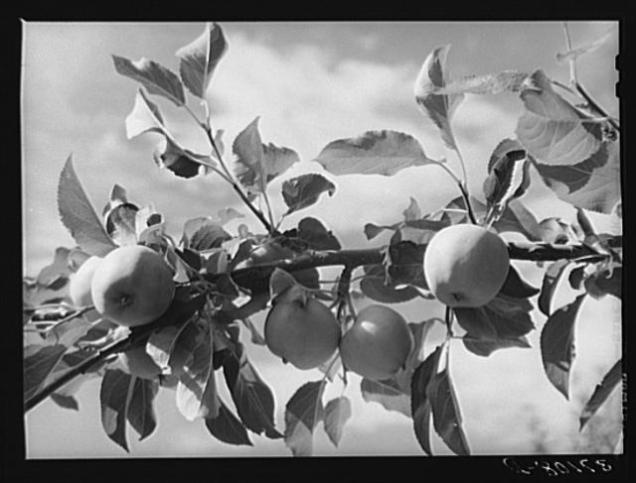
Caption: Apples are one of the main fruit crops along the Rio Pueblo at Dixon, New Mexico. 1940

8b25707r

We use this Russell Lee image from The Library of Congress often as a detail and graphic element in our posts. Here it is presented complete and with links and record details.

Apples are one of the main fruit crops along the Rio Pueblo at Dixon, New Mexico

Creator(s): Lee, Russell, 1903-1986, photographer

Site: Prints & Photographs

Original Format: Photo, Print, Drawing

Date: July, 1940

Collections:Farm Security Administration/Office of War Information Black-and-White Negatives

Part of: Farm Security Administration – Office of War Information Photograph Collection (Library of Congress)

Credit Line: Library of Congress, Prints & Photographs Division, FSA/OWI Collection,

Call Number: LC-USF34- 037108-D [P&P]

Repository: Library of Congress Prints & Photographs Division Washington, DC 20540 http://hdl.loc.gov/loc.pnp/pp.print

The Unpublished Atlas: A List of Apples. A View of the Cultivation of Fruit Trees by William Coxe.

Images of the 24 pomological watercolor illustrations, on 12 plates, listed below, are posted on at USDA National Agricultural Library website in the Rare Books Special Collections Image GalleryThe complete Atlas is digitized, but not all images from the Atlas are currently available in Rare Books Special Collections Image Gallery.
The originals are full size watercolor illustrations on Bristol board, created by Elizabeth Coxe McMurtry and her sisters to illustrate the unpublished second edition of their father’s book.
It is possible these images were painted circa 1817-1831, making them some of the earliest known color pomological illustrations of American fruits. An 1857 article in Country Gentleman magazine describes the watercolor illustrations in detail, indicating they were executed prior to that date.
Pomological illustrations currently on view online, as thumbnails, in the Rare Books Special Collections Image Gallery:
Note: The Atlas contains many more illustrations. The images posted are only a selection.
Apples:
Domini
Hewe’s Crab
Roane’s White Crab
Orange Apple
Grey House
Winesap
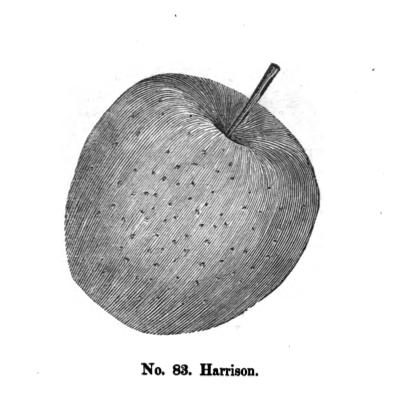
Harrison
Pomme d’Apis or Lady Apple
Poveshon
Siberian Crab
Styre
Loan’s English Pearmain
Rambo or Romanite
The Cider Apple
The Black Apple
White Sweet or Wheterills White Sweeting
Glouschester White
Fearn’s Pippin
Newton Pippin
Preistly
Esopus Spitzenburg
Vendervere
Fama Gusta
Peaches:
Red-Cheek Malacotan
Early Anne
Monstrous Pavie

Heroes of Cider: Pomologist William Coxe, Jr. Of Burlington, NJ (1762-1831)

Historical or Biographical Sketch:

William Coxe (1762-1831), a pomologist, was one of the foremost fruit growers in America who experimented with new varieties of fruits at his home in Burlington, New Jersey. He collected specimens from the United States and abroad. A View of the Cultivation of Fruit Trees in America is a classic of American pomological literature. It is considered by many specialists as the illustrative evidence of fruit culture during the colonial and revolutionary period of the new American nation.”

source: Special Collections, National Agricultural Library

The full title of his masterwork:

A View of the Cultivation of Fruit Trees, and the Management of Orchards and Cider: with accurate descriptions of the most estimable varieties of native and foreign apples, pears, peaches, plums, and cherries, cultivated in the middle states of America : illustrated by cuts of two hundred kinds of fruits of the natural size : intended to explain some of the errors which exist relative to the origin, popular names, and character of many of our fruits, to identify them by accurate descriptions of their properties and correct delineations of the full size and natural formation of each variety, and to exhibit a system of practice adapted to our climate, in the successive stages of a nursery, orchard, and cider establishment.

His book can be found and read online via google books and archive.org.

He was also a Statesmen. Entry for William Coxe Jr. Biographical Directory of the United States Congress, 1774-2005:

“He was a Representative from New Jersey; born in Burlington, N.J., May 3, 1762; served as a member of the State general assembly 1796-1804, 1806-1809, and again in 1816 and 1817; served as speaker 1798-1800 and again in 1802; elected as a Federalist to the Thirteenth Congress (March 4, 1813-March 3, 1815); author; died in Burlington, Burlington County, N.J., on February 25, 1831; interment in St. Mary’s Churchyard.”

He also had a national reputation for his cider, at an age when it was a famous and characteristic beverage” this according to  Proceedings of the State Horticultural Society at Its Annual Session, Volume 42 , New Jersey State Horticultural Society, 1917.

No. 83

Inside Cider: Regarding Cider Apple Terminology

LOC apple image

More USEFUL TERMS regarding Cider Apples:

TANNINS: bitter, astringent substances found in some apples. They give bitterness & complex, earthly flavors, plus drying, tautening, & body in the “mouthfeel”.

ACIDS: sour-tasting, or ‘sharp’ substances found in apples. Acids give a refreshing sourness, bright flavor, & a keen, mouth-watering “feel’. To ferment cleanly, raw cider juice needs a strong acid content.

SUGARS: sweet-tasting substances found in apples. Yeast ferments natural fruit sugars into alcohol.

CIDER APPLES: apple varieties that produce superior juice for fermenting. Like wine grapes, cider apples often taste bad. They can be super-bitter, super-sour, sickly-sweet, dry soft or any combination of the above. When a good eating apple works well for cider, or vice-versa, it is prized by Farnum Hill Cider & Poverty Lane Orchard’s as a ‘cross over’.

BITTERSWEETS: a class of cider apple varieties valued for high tannin content & high sugar content.

SWEETS: apple varieties grown for high sugar alone.

BITTERSHARPS: a class of cider apple varieties valued for high tannin content & high acid content.

SHARPS: apple varieties grown for high acid alone.

Adapted from Farnum Hill Cider & Poverty Lane Orchards booklet Inside Cider: Fast Facts for Wholesalers, Retailers, and Aficionados from Farnum Hill Cider © copyright Poverty Lane Orchards 2011. All Rights Reserved. Used by permission.

Discover the Craft of Documentary Food Photographer Clare Barboza.

harmony2

Clare Barboza is a Seattle-based visual artist and documentary food photographer focused on capturing the telling details that illuminate the stories behind what we eat, make, raise, and grow.

Her evocative images are featured in Rowan Jacobsen’s upcoming book, Uncommon Apples. Glimpse a few portraits of these unique apples: Knobbed Russet, Blue Pearmain, and wild Khazhaks – here. Clare discusses her experiences shooting the book, and shares beautiful pome fruit images, in her blog post a whole lotta apples.

Enjoy the images Clare graciously shared with us, and explore her work further at ClareBarboza.com

i

i

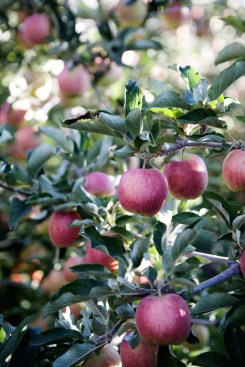
Image: Harmony Orchards

All images courtesy of the photographer. All images copyright © Clare Barboza.

Pruning Cider Trees with Poverty Lane Orchards: When In Doubt, Cut It Out.

“What are orchard people doing all winter? PRUNING.”

Steve Wood and the expert pruning team at Poverty Lane Orchards demonstrate and explain the how and why of pruning cider trees.

video via YouTube

Farnum HIll Ciders

Poverty Lane Orchards

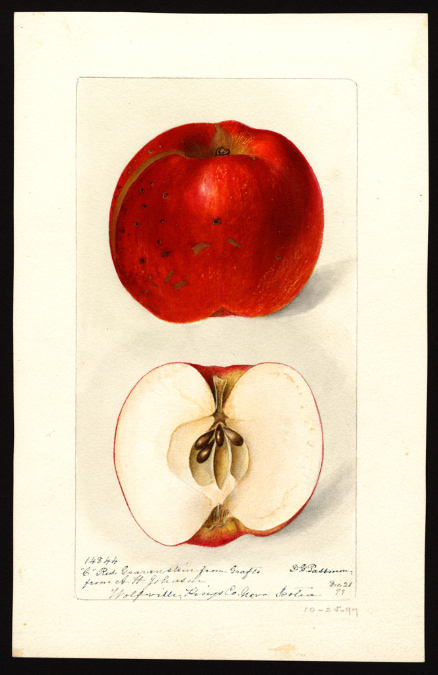
Malus domestica: Red Gravenstein, 1897. Wolfville, Kings County, Nova Scotia, Canada.

POM00003059wolfvilleMalus domestica: Red Gravenstein

Artist:
Passmore, Deborah Griscom, 1840-1911
Scientific name:
Malus domestica
Common name:
apples
Variety:
Red Gravenstein
Geographic origin:
Wolfville, Kings County, Nova Scotia, Canada
Physical description:
1 art original : col. ; 16 x 25 cm.
Specimen:
14844
Year:
1897
Notes on original:
From Grafts
Date created:
1897-12-21
Rights:
Use of the images in the U.S. Department of Agriculture Pomological Watercolor Collection is not restricted, but a statement of attribution is required. Please use the following attribution statement: “U.S. Department of Agriculture Pomological Watercolor Collection. Rare and Special Collections, National Agricultural Library, Beltsville, MD 20705”

What is a Sport: Darwin, Mutants, Apples & The Red Gravenstein.

LOC apple image

SPORT: 

Spontaneous somatic mutation and mutant cultivars.

Mutations are often called bud variations, bud mutations, somatic mutations, bud sports or briefly, sports.

Darwin (1868) defined bud variations as ‘all changes in structure or appearance which occasionally occur in full-grown plants in their flower-buds or leaf buds’ and in many cases ascribed these ‘changes’ to ‘spontaneous variability.’

source: Mutation Breeding: Theory and Practical Applications 1988

A. M. van Harten, Agricultural University, Wageningen, The Netherlands

SPORT:

A sudden variation in habit of growth or blossom color from the rest of the plant or others plants of its kind. Caused by a genetic change that may be accidental or spontaneous, or intentionally induced.

source: www.botany.com

SPORT: 

In botany, a sport or bud sport is a part of a plant that shows morphological differences from the rest of the plant. Sports may differ by foliage shape or color, flowers, or branch structure. Sports with desirable characteristics are often propagated vegetatively to form new cultivars that retain the characteristics of the new morphology.

source: wikipedia.org

See: Red Gravenstein. This variety is a sport (natural genetic mutation) of the Gravenstein apple.

Species: Malus domestica. Parentage: Sport of Gravenstein. Origin: Washington, United States.

source: orangepippin.com