Cider Mixology: Brewer & Keep Cocktail with Millstone Ciderberry

shakersmonotone

Woodberry Kitchen in Baltimore, Maryland received two semi-finalist nominations from the James Beard Foundation this year for Outstanding Bar Program and Best Chef: Mid-Atlantic region.

Connor Rasmussen, mixologist at Woodberry Kitchen shares his recipe for the Brewer & Keep: “It’s a wonderfully balanced cocktail, and the cider is a crucial aspect (despite being the final ingredient)”.

Brewer & Keep –
.75oz raw honey gin (Barr Hill)
.75oz smokey whiskey (High West Campfire)
.75oz wort (a grain tea that is a part of the brewing process)
.25oz maple syrup
.25oz lemon juice

Shaken | double strained into a 4oz coupe glass | topped with the Millstone Ciderberry.

Millstone Ciderberry is crafted from local raspberries pressed straight from the farm and blended with Millstone oak aged cider.

Visit Millstone Cellars site to learn more about the Monkton, Maryland craft cidermaker: www.millstonecellars.com

For a bit more about Millstone’s cidermakers, read this April 10, 2013 article by Richard Gorelick in The Baltimore Sun.

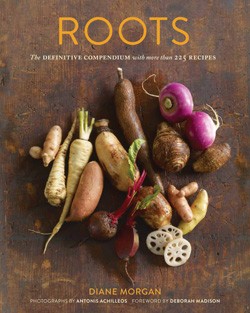
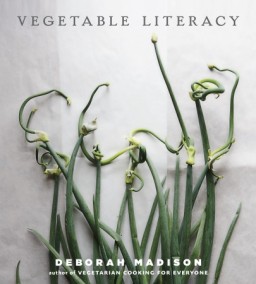
Earth Day Reading: Vegetable Literacy & Roots. Pair with American Craft Cider.

www.randomhouse

Deborah Madison Vegetable Literacy

Roots Diane Morgan

9780811878371_norm

Cider Review: 1626 New Amsterdam Dinner at The Farm on Adderley: Cider In Context

New Amsterdam Dinner at The Farm on Adderley: Cider In Context

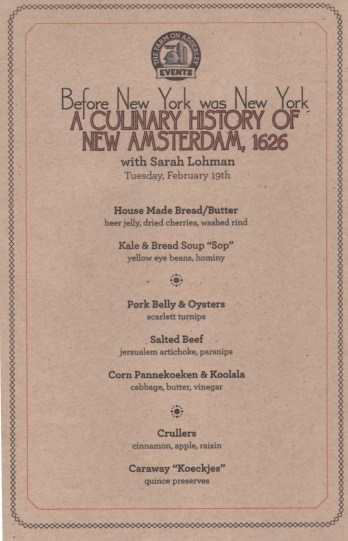
Before New York Was New York: A Culinary History of New Amsterdam, 1626

New-Am-Flier

Venue: The Farm on Adderley restaurant and event space.

What: Dinner – A curated and contextualized meal inspired by early Dutch settlers in Nieuwe Amsterdam and the Lefferts’ family cookbook. The Leffert’s were early Dutch settlers with a stronghold of land in the Flatbush (“Vlacke Bos”) area of Brooklyn.

Context Provided By: Historic Gastronomist, Sarah Lohman, founder and author of Four Pounds Flour Historic Gastronomy blog.

The Seasonal Menu: included: house-made bread & butter with dried fruit and cheese, kale & bread “sop”, salted beef, corn “panne­koeken”, a “koolsla” of cabbage, butter & vinegar, and for dessert – apple crullers and salted caraway “koeckjes” with quince preserves.

The Farm on Adderley’s well-curated drinks list features several cider and mead options which were the recommended pairings for the evening.

Ciders on offer included: Breezy Hill Farmhouse Cider, Farnum Hill Extra Dry Cider, and Sylboro Old Sin.

Cider #1: A glass of Breezy Hill Farmhouse Cider – A fresh, unfiltered, alive and lively apéritif. The perfect breakfast cider, also well matched to the bloomy rind cheese, dried fruits, beer jelly, and creamy, homemade butter.

Cider #2: A bottle of Slyboro Old Sin – Enjoyed throughout the meal. Well paired with the cured and roasted meats and exceptional when paired with the various root vegetables and bitter winter greens.

An emerging idea, noted in several of our upcoming American cider reviews: American craft ciders express an extremely strong affinity with raw, cooked, and pickled, root and cruciferous vegetables, especially – but not exclusively – greens. Brussel sprouts, cabbages, kales – this is where American cider parings seem to really express terroir. The humble, practical and sustaining greens are elevated by the cider and the straightforward pleasures of a well made cider are intensified when consumed with roots and greens. American agrarian character as part of a distinct American terroir or taste of place, is clearly expressed through the apple, the vegetable, and the cider maker’s craft.

These American ciders paired with humble roots and hardy greens lead to a deeply satisfying sense of well-being. The transporting quality of these pairings remind us of the pleasures of enjoying the “fruits of one’s own labors” at the table, as discussed in David Buchanan’s book Taste, Memory.

Cider #3: A glass of Farnum Hill Extra Dry Cider – with the koeckjes and crullers. A dry, crisp, compliment to the caraway, salt and spice of the sweets. Not an obvious choice as it deviates from the conventional sweet with sweet notion, but this mix of sweet, spice and ultra dry cider was, to our tastes, a very fine and refreshing ending to a most enjoyable meal.
Menu

This idea of a regional and historical meal in context is an interesting way to present ciders – and could easily inspire makers and purveyors to create their own locale and time specific cider dining or tasting event.
Heroes of Cider: Pomologist William Coxe, Jr. Of Burlington, NJ (1762-1831)

Historical or Biographical Sketch:

William Coxe (1762-1831), a pomologist, was one of the foremost fruit growers in America who experimented with new varieties of fruits at his home in Burlington, New Jersey. He collected specimens from the United States and abroad. A View of the Cultivation of Fruit Trees in America is a classic of American pomological literature. It is considered by many specialists as the illustrative evidence of fruit culture during the colonial and revolutionary period of the new American nation.”

source: Special Collections, National Agricultural Library

The full title of his masterwork:

A View of the Cultivation of Fruit Trees, and the Management of Orchards and Cider: with accurate descriptions of the most estimable varieties of native and foreign apples, pears, peaches, plums, and cherries, cultivated in the middle states of America : illustrated by cuts of two hundred kinds of fruits of the natural size : intended to explain some of the errors which exist relative to the origin, popular names, and character of many of our fruits, to identify them by accurate descriptions of their properties and correct delineations of the full size and natural formation of each variety, and to exhibit a system of practice adapted to our climate, in the successive stages of a nursery, orchard, and cider establishment.

His book can be found and read online via google books and archive.org.

He was also a Statesmen. Entry for William Coxe Jr. Biographical Directory of the United States Congress, 1774-2005:

“He was a Representative from New Jersey; born in Burlington, N.J., May 3, 1762; served as a member of the State general assembly 1796-1804, 1806-1809, and again in 1816 and 1817; served as speaker 1798-1800 and again in 1802; elected as a Federalist to the Thirteenth Congress (March 4, 1813-March 3, 1815); author; died in Burlington, Burlington County, N.J., on February 25, 1831; interment in St. Mary’s Churchyard.”

He also had a national reputation for his cider, at an age when it was a famous and characteristic beverage” this according to  Proceedings of the State Horticultural Society at Its Annual Session, Volume 42 , New Jersey State Horticultural Society, 1917.

No. 83

On (hard) Cider

Cider – An alcoholic beverage traditionally made from fermented apple juice, currently experiencing a craft revival.

narrowheader - Version 3

We say cider. We mean a fermented (alcoholic) apple or other pome fruit beverage. We are following the world tradition (and until the early 20th century, the American tradition) of calling a fermented apple beverage cider, and referring to apple and other pome fruit juice, as juice or sweet cider. Part of OUR American Craft Cider Revival effort is helping to revive the use of the word cider as the description for fermented apple juice.

It’s cider, anything else is just juice.

Note: We are aware that the current legal definition in the United States is, in summary: hard cider: a still apple wine of 7% or less alcohol by volume. But things are changing.

For a detailed description of the current legal definitions in the United States see:

Hard Cider, Semi-Generic Wine Designations, and Wholesale Liquor Dealers’ Signs (97-2523) 2001

Cider Review: West County REINE de POMME: Cider52

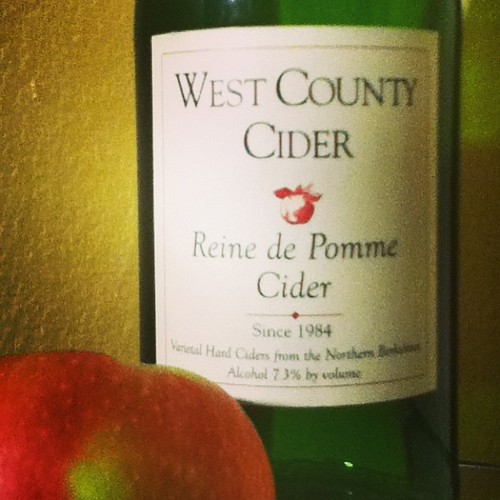
tumblr_mlmwdeuXBU1s240hto1_500Cider: WEST COUNTY REINE DE POMME

Maker: West County Cider Origin: Colrain, Massachusetts

website: www.westcountycider.com

ABV: 7.3% Bottle: 750 ml, champagne cork

Style Notes: Small batch varietal hard cider. Primary apple is the Reine de Pomme, blended with Dabinett and Redfield.

Fruit: Apple.

Makers Fruit Notes: “Reine de Pomme is an archaic French Apple. We found it in the Geneva Reference Orchard. In 1987, in France, the only reference to it we found was a listing in a nursery catalog from the 1920’s at an apple museum in Normandy. No one seemed to know of it. But, forgotten or not, we were struck by the taste- tannins and iron- that made it inedible, but intriguing for a cider. As a cider it has a deep, dark-fruit, honeyed taste. We blended it with our Dabinet to round out the tannins, and Redfield to add bright fruit and to balance the bitter-sweets. Though blended, Reine de Pomme leads the taste, and the Dabinet and Redfield fall in nicely as supports. It is the fullest-bodied cider we have made. And the closest in taste to a French Cider”.

Bottle Notes: The Reine de Pomme – ‘Queen of Apples’ is a classic French ‘bittersweet’ apple. The strong tannins give complexity to this cider. This cider stands up well to robust tastes at the table. Dry.

Tasting Notes – In The Glass: Pale, clear, and bright rose gold. Tiny surface beads. Some legs/tears. Sweet dessert apple, sous bois, malted sugar, vanilla, tropical fruit, pineapple, ‘bright’ green notes of pepper and grass. Some leather, hints of spice, white pepper, and wood. Iron. Long tannic finish with medium acidity. Winey with a light, silky, smooth mouth feel.

Our Pairings – The Tasting Lab: This queen becomes humble when matched with food, elevating the flavors in the food to heights beyond her own. As a supporting player she does her best work with intense aromatics (garlic, lemon zest, oregano) but we found little that enhanced her own qualities or produced a completely new experience through pairing.

Cheesemonger’s Notes: We tasted this with St. Nectaire which brought out a caramel note that was undetected in the cider on its own or with our other flavor pairings. Other fairly mild washed rinds would probably produce the same delicious effect. Consider Hudson Red or Rougette.

Overall Impressions: Another beauty pageant contestant this pretty in golden pink cider boasts a powerfully sweet aroma that is perfectly balanced by complex tannins and bitter flavor elements. Pair with zesty Mediterranean dishes for a regal match or enjoy Reine de Pomme on its own to appreciate her unique variety of flavor notes.

If you have tasting notes to add please leave a comment.

Inside Cider: Regarding Cider Apple Terminology

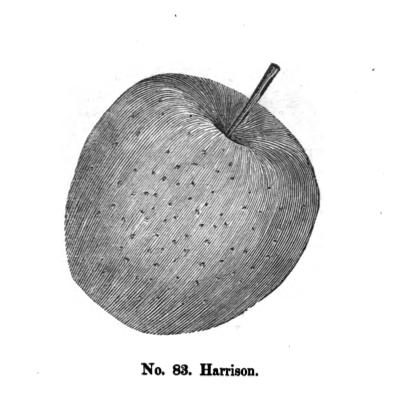
LOC apple image

More USEFUL TERMS regarding Cider Apples:

TANNINS: bitter, astringent substances found in some apples. They give bitterness & complex, earthly flavors, plus drying, tautening, & body in the “mouthfeel”.

ACIDS: sour-tasting, or ‘sharp’ substances found in apples. Acids give a refreshing sourness, bright flavor, & a keen, mouth-watering “feel’. To ferment cleanly, raw cider juice needs a strong acid content.

SUGARS: sweet-tasting substances found in apples. Yeast ferments natural fruit sugars into alcohol.

CIDER APPLES: apple varieties that produce superior juice for fermenting. Like wine grapes, cider apples often taste bad. They can be super-bitter, super-sour, sickly-sweet, dry soft or any combination of the above. When a good eating apple works well for cider, or vice-versa, it is prized by Farnum Hill Cider & Poverty Lane Orchard’s as a ‘cross over’.

BITTERSWEETS: a class of cider apple varieties valued for high tannin content & high sugar content.

SWEETS: apple varieties grown for high sugar alone.

BITTERSHARPS: a class of cider apple varieties valued for high tannin content & high acid content.

SHARPS: apple varieties grown for high acid alone.

Adapted from Farnum Hill Cider & Poverty Lane Orchards booklet Inside Cider: Fast Facts for Wholesalers, Retailers, and Aficionados from Farnum Hill Cider © copyright Poverty Lane Orchards 2011. All Rights Reserved. Used by permission.

Cider Review: Breezy Hill Orchard Hudson Valley Farmhouse Cider: Cider52

8362927647_26559c4546_b

Cider: BREEZY HILL ORCHARD HUDSON VALLEY FARMHOUSE CIDER

Maker: Breezy Hill Orchard and Cider Mill

Origin: Staatsburg, New York

website: www.hudsonvalleycider.com

ABV: 4.5% ABV Bottle: 2 litre growler, screw cap

Maker’s Style Notes: Produced by Elizabeth Ryan of Breezy Hill Orchard. Hudson Valley Farmhouse Cider is fresh, unfiltered, unsulphited, authentic artisan farmhouse cider. It has a shelf life of 2-4 weeks and must be kept refrigerated. Slightly effervescent…a rare opportunity to enjoy a truly authentic beverage.

Fruit: Apples.

Tasting Notes – In The Glass: Opaque golden amber. Effervescent with mostly tiny bubbles. The primary flavors are all fruit but of various types: Pear, Tropical Fruit, Banana, Citrus, Culinary Apple. Vegetal and floral notes. Grass and Vanilla. Medium body with a silky mouthfeel. Sweetness balanced by salinity. Acid and bitterness are present but in low levels.

Rustic and easy drinking like a Saison.

Our Pairings – The Tasting Lab: Drank solo (before breakfast!) – but mused on cured meats, bitter greens, fudgey blue cheeses and best pairing of all – Maple Bacon Donuts. This one makes us think of our colonial forebearers. Surely Ben (Franklin) quaffed a beverage like this before bustling off to invent something extremely useful.

Red Flannel Hash (hash with beets) just begs to be paired with breakfast cider – channel your inner lumberjack.

Overall Impressions: This IS Breakfast Cider. Of course discerning cider drinkers may certainly find other times of day to enjoy this most wholesome and refreshing drink.

Tasting was over a period of days and the cider is so fresh and alive that each day it offered a different profile and was SO lively. Sweet, silky, astringent, slightly effervescent, and bursting with all kinds of apple cider goodness. We love this cider. High marks for transporting qualities.

If we were having Breezy Hill Orchard’s Hudson Valley Farmhouse Cider with donuts for breakfast we might try something like:

Dynamo Donut Maple Glazed Bacon Apple Donuts – AND they make a Quince Crumb Donut.

EVERYDAY is Bacon Donut Day.

Donut Plant‘s Ginger Donut – Cake or Yeast.

For further reading while enjoying your Breakfast Cider:

Donut Planet: the History of the Donut by Michael Krondl at Savuer.com

Cider Review: Cider52: Harvest Moon Cidery Heritage Hops Hard Cider with Hops

8621389798_843932496d

Cider: HARVEST MOON CIDERY HERITAGE HOPS HARD CIDER with Hops

Maker: Harvest Moon Cidery

Origin: Critz Farms, Cazenovia, New York

website: harvestmooncidery.com

ABV: 6.75% Bottle: 22 oz bottle, crown cap

Style Notes: Hopped hard cider. Made from fresh sweet cider, with champagne yeasts, lightly carbonated.

Fruit: Apples.

Makers Bottle Notes: “Our Heritage Hops Cider is a tribute to the early hop growing history of Madison County, dating back to the mid 1800’s. Using a strain of locally grown hops, propagated from those originally grown nearby, we “dry hop” the cider after fermentation. It is aged for several months, then lightly carbonated”.

Tasting Notes: In The Glass: Clear, bright, pale straw. Initially lots of large bubbles, some legs, settles into a tiny mousse ring. Piquant, slightly pungent, winey, Sauvignon Blanc, steel, hoppy, herbaceous, asparagus, green pepper. Tannic, slightly bitter bite from the hops, medium long finish, somewhat drying.

Our Pairings – The Tasting Lab: Liddabit Sweets Sweet Potato and Black Pepper Caramels. Cider enhances the caramel’s flavors and the caramels intensify the bitter crisp acidity of the hoppy cider.

Cheesemonger’s Notes: Any bloomy rind goats milk (Humboldt Fog, Coupole, Valencay) will pair exceptionally well with the bright flavors in this cider. Spicy Blues such as Valdeon or Blaue Geiss would also be lively companions.

Overall Impressions Refreshing flavors of fresh cut grass, minerals, green pepper, nettles and of course hops. If you love American IPAs this is a cider for you.

Note: Harvest Moon Cidery, Critz Farms “plans to establish a new orchard dedicated specifically to growing cider apples. A mix of European cider apple trees and other dessert apple trees will be planted in the spring of 2014.”

If you have tasting notes to add please leave a comment.

Cider Calendar: Save The Dates: Cider Summits Seattle & Portland 2013.

Cider Calendar: Save The Date: Cider Summits  2013

SBS Imports / Cider Summit 2013.

The dates are set for the Portland, Oregon & Seattle, Washington 2013 Cider Summits:

Portland – Friday & Saturday, June 21st & 22nd.

Seattle – Friday & Saturday, September 6th & 7th

The Friday sessions will be 3 PM-8 PM and Saturday will be 12 Noon-6 PM .

Watch for updates at: www.cidersummit.com.