Terminology: Defining The Fruit
Defining the Fruit
From The National Association Of Cider Makers “The voice of the UK’s cider makers”.
website: cideruk.com
Cider apple varieties are divided into four categories according to the relative proportion of acidity and tannin:
Sweet varieties are the blandest of the four categories, being low in both components. They are useful to blend with ciders from the more strongly flavoured varieties, which, by themselves, would be too extreme in taste and aroma to be palatable. Typical examples of sweet apples are Sweet Coppin, in use to a small extent, and Court Royal which was used extensively at one time but rarely used nowadays.
Bittersweet apples impart the characteristic flavour of English ciders; as the name implies they are low in acid and high in tannin. The latter is responsible for two sensations on the palate – astringency and bitterness. In the bittersweet apple, there is a whole range of combinations of these two characteristics, varying from little astringency coupled with intense bitterness to very marked astringency coupled with mild bitterness. Typical bittersweets are Dabinett, Yarlington Mill and Tremlett’s Bitter.
Sharp varieties, so called because the predominant characteristic is that of acidity, are encountered less frequently today, possibly because culinary fruit, which has a similar flavour balance, can be substituted for this class. There are, however, recognised full sharp cider varieties, two of which are Crimson King and Brown’s Apple.
Bittersharp is the fourth class of cider apple. These are fairly high in acid and tannin, although the latter component does not show the wide range of flavours exhibited by the bittersweet. Stoke Red is a good example.
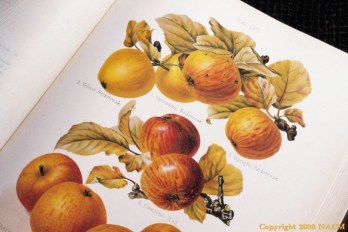
Image: 1860s Cider Apples from The Herefordshire Pomona. Illustrations by Miss Ellis and Miss Bull.
Image and definitions courtesy of NACM. Used by permission.
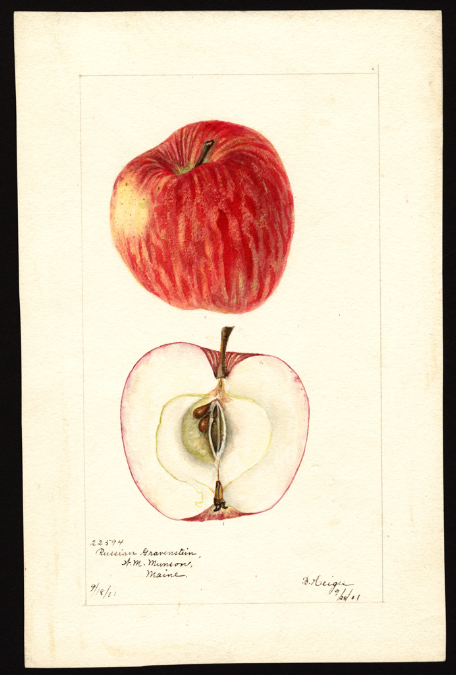
Malus domestica: Russian Gravenstein, 1901. Maine.
Malus domestica: Russian Gravenstein
- Artist:
- Heiges, Bertha
- Scientific name:
- Malus domestica
- Common name:
- apples
- Variety:
- Russian Gravenstein
- Geographic origin:
- Maine, United States
- Physical description:
- 1 art original : col. ; 17 x 25 cm.
- Specimen:
- 22594
- Year:
- 1901
- Date created:
- 1901-09-28
- Rights:
- Use of the images in the U.S. Department of Agriculture Pomological Watercolor Collection is not restricted, but a statement of attribution is required. Please use the following attribution statement: “U.S. Department of Agriculture Pomological Watercolor Collection. Rare and Special Collections, National Agricultural Library, Beltsville, MD 20705”
Great Cider Starts With Great Fruit.
We Like Cider.
And you can’t really like cider without being fairly keen on apples.
To quote the esteemed makers at Farnum Hill Cider & Poverty Lane Orchards:
“Anywhere, in any words, great cider starts with great fruit.”
We Like Apples.
Expect more about apples – orchards, pollinators, varietals, history, tastings, fruit expression.
We Are Apple Drinkers.*
*A nice turn of phrase from the always interesting American Orchard.
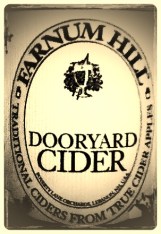
Cider Review: Farnum Hill Cider DOORYARD Batch 1202A: Cider52
Cider: FARNUM HILL CIDER DOORYARD BATCH 1202A
Maker: Farnum Hill Cider & Poverty Lane Orchards Origin: Lebanon, New Hampshire
website: www.povertylaneorchards.com
ABV: 7.5% Bottle: 750 ml, champagne cork
Makers Style Notes: What ARE Dooryard ciders? “Lovely cider batches” that departed too much from the flavor profiles of established Farnum Hill Cider blends. The ongoing Dooryard series: experimental ciders, ranging from bittersweet to superfruity, that sell out quickly, never to be made again. “It’s a veritable feast of the weird and the wild,” according to Steve Wood, one of Farnum Hill Ciders founding makers.
Bonus Feature: Each keg or bottle of Dooryard Cider is marked with a batch number, allowing you to look up the details of your specific batches apples, blend, and tasting notes. It’s a glimpse behind the making process at Farnum Hill Cider, and a chance to read more about the people, processes, and ideas involved in creating your batch of Dooryard Cider.
Fruit: Apples.
Cider Maker: Nicole LeGrand Leibon.
Makers Notes: Dooryard #1202A
“Dooryard 12o2A jumps away from the ‘rowdier tannins’ that we forecast for the Dooryard tribe. The fruit notes cluster mostly in the peachy plummy stone-fruit family, but without sweetness. Prominent is a long smooth savory ‘umami’ woven throughout 1202A’s aromas and flavors, pleasurably escorting the many acid, bitter, fruity, and woodsy notes that carry into the finish. But tannic bite and astringent pucker? Not really. So much for generalizations”.
Our Tasting Notes:
In The Glass: Dooryard 1202A is clear, bright, shining, pale gold, with a faint green tinge.
Aroma & Flavour:: Fresh dessert apple, green apple, tropical fruits, pineapple. Cider is full of “zing” with a tart crisp tannin balance.
-Ed. Note: When sampling, Farnum Hill Cider often gets short shrift as it is the cider we tend to chat over instead of review in a focused fashion. We decided that this indicates a very successful cider, as it inspires such conviviality.
Our Pairing-The Tasting Lab: We tried Farnum Hill Dooryard Batch 1202A with a variety of foods, including raw greens and brussel sprouts, a pairing that heightened the perceived experience of the ciders ‘sweetness’ and highlighted its inherent complexity. The raw brussel sprouts also benefited from the pairing, exhibiting delightful flavor complexity previously unnoticed in the little brassicas.
For a handy reference (with recipes), and an aid to studying the vegetable kingdom and understanding the relationships within botanical families see: Vegetable Literacy by Deborah Madison.
(See our The Farm on Adderley: Cider in Context review for our thoughts on the match of American craft cider with roots and earthy vegetables)
We like this cider very much with food or alone.
Cheesemonger’s Notes: Cypress Grove Purple Haze- a fresh chèvre made with fennel pollen and lavender livens up the already bright flavors in the cider and rounds out the whole experience by providing a hint of sweetness. Avoid Blues or other intense cheeses (aged Goudas, Cheddars, Parms) as they overpower the soft fruit flavors of 1202A.
Overall Impressions: We are always happy with a glass or bottle of Farnum Hill Cider. The Dooryard series, while divergent from the brands standard profiles, never disappoints. Consistent quality, finely crafted. Too good not to share.
Drinking the Farnum Hill DOORYARD series regularly can be a great cider education tool. Farnum Hill Cider’s decision to save cider blends that step outside of their established commercial brand profiles and sell Dooryards as unique one of a kind batches is an interesting example of real, classic, American style craft cider. Each batch reflecting variations in methodology, fruit available, and blending options. By posting tasting notes online for each specific Dooryard batch, Farnum Hill allows the cider explorer to understand how and why these flavor profiles deviate from their “standard” blends (Extra Dry, Semi-Dry, Farmhouse) and furthers our comprehension of the standard blends themselves. What are the characteristics of a Farmhouse? What differentiates this from an Extra Dry or Semi-Dry? Enjoy Dooryards often to taste the answers to these questions and keep up with the happenings at Poverty Lane.
Further reading: A Visit to Farnum Hill Ciders (NH): Watching Art Being Made from the blog East Coast Wineries.
If you have tasting notes to add please leave a comment.
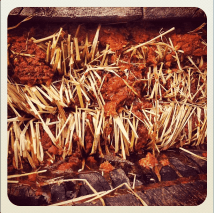
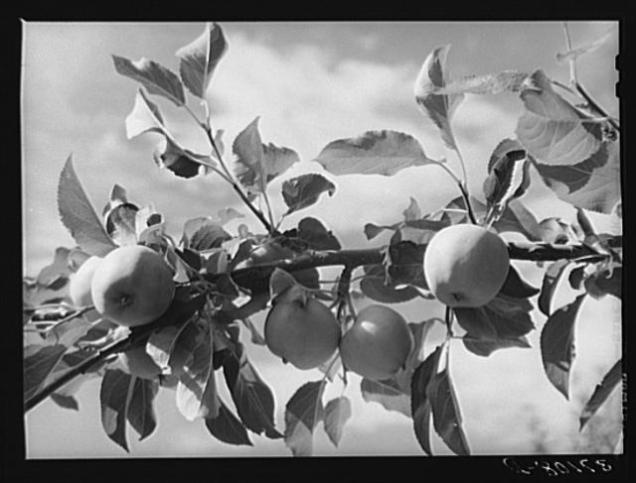
Caption: Apples are one of the main fruit crops along the Rio Pueblo at Dixon, New Mexico. 1940
We use this Russell Lee image from The Library of Congress often as a detail and graphic element in our posts. Here it is presented complete and with links and record details.
Apples are one of the main fruit crops along the Rio Pueblo at Dixon, New Mexico
Creator(s): Lee, Russell, 1903-1986, photographer
Site: Prints & Photographs
Original Format: Photo, Print, Drawing
Date: July, 1940
Collections:Farm Security Administration/Office of War Information Black-and-White Negatives
Part of: Farm Security Administration – Office of War Information Photograph Collection (Library of Congress)
Credit Line: Library of Congress, Prints & Photographs Division, FSA/OWI Collection,
Call Number: LC-USF34- 037108-D [P&P]
Repository: Library of Congress Prints & Photographs Division Washington, DC 20540 http://hdl.loc.gov/loc.pnp/pp.print
Cider Review: Crispin BARE NAKED: Cider52
Cider: Crispin BARE NAKED
Maker: Crispin Cider Company
Origin: Minneapolis, MN & Colfax, CA
website: www.crispincider.com
ABV: 6.0 % Bottle: 22 fl oz. 650 ml.
Fruit: Apple. Uses fresh juice and concentrate.
Cider Maker: Bruce Nissen, Head Cider-Maker, Crispin Cider Company.
Maker’s Style Notes: USDA Organic certified hard ciders. Double fermentation process. Natural fermentation without chaptalization. American organic apple juice and “Forbidden Fruit” wit yeast. Following full fermentation, a second fermentation is initiated with the addition of new raw organic juice and sparkling wine yeast.
Our Tasting Notes: In The Glass: Crispin BARE NAKED:
In The Glass: Unfiltered, slightly opaque, golden amber. Tiny bead/bubble.
Aroma: Very confectionary, “real” candy – not synthetic – sugar aromas.
Taste: Flavors of sweet and sugary dessert apples, warm spun sugars, with a soft mouthfeel. No real “crispness” or acidity. Slight bright, green and grassy notes. A light spice finish, soft on the palette, no astringency.
Final Glass: Estery, with aromas of bananas and spice, and noticeably more opaque, creamy, milky, than earlier pours, with some residual sediments.
Overall Impressions: Sweet apples and spun sugar, with hints of spice and a bit of green grass brightness.
Note: Drank up-chilled, not over ice as maker recommends. Will try again over ice as suggested to see how and if that alters the flavor profile and cider drinking experience.
And: This is another Crispin cider that is fermented using beer yeasts (AND wine yeasts). Beer yeasts and cider making will be discussed in an upcoming post.
Pairing Notes- The Tasting Lab: We tried with curry spiced pumpkin seeds. The cinnamon, clove, and peppery spices of the seeds matched well with the sugar apple sweetness of the cider. Crispin Bare Naked cider will pair smoothly with spicy Thai food, Swedish meatballs, and Indian vindaloos and curries, as the straight ahead sugars and hints of spice in this cider will accent and compliment the complex flavors in a variety of highly seasoned foods.
If you have tasting notes or pairing suggestion to add please leave a comment.
Cider Review: Crispin THE SAINT: Cider52
Maker: Crispin Cider Company
Origin: Minneapolis, MN & Colfax, CA
website: www.crispincider.com
ABV: 6.9 % Bottle: 22 fl oz. 650 ml.
Maker’s Style Notes: Super Premium cider. Naturally fermented with Belgian Trappist yeasts. Organic maple syrup added. An homage to American craft beer makers pioneer spirit. Designed to be enjoyed over ice.
Fruit: Apple.
Cider Maker: Bruce Nissen, Head Cider-Maker, Crispin Cider Company
Our Tasting Notes: Crispin THE SAINT:
In The Glass: Golden, creamy, milky, opaque. Lots of tiny very active effervescent bubbles.
Aroma: Very strong confectionary aromas on the nose, with a slight maple sugar note.
Taste: Culinary apples, spun sugars, honey syrup, with hints of maple in the finish.
Overall Impressions: This cider has one dominant consistent note: sweetness. Smooth, sweet, uncomplicated.
Note: Drank this cider up and chilled, not over ice as maker recommends. Next time we will try over ice and see how that affects the cider drinking experience.
And: Beer yeasts used in cider making. We’ll discuss that topic in an upcoming post.
Pairing Notes-The Tasting Lab: Drank solo.
For more about Crispin Cider Company, read this informative interview from Heavy Table with Crispin Cider Company founder and CEO Joe Herron, written by Joe Norton, 2009.
If you have tasting notes to add please leave a comment.
Further Reading:
For an interesting read on apples and the human quest for sweetness: see Botany Of Desire: A Plants-Eye View of the World, Michael Pollan’s fascinating look at how plants have directed our desires.
“Pollan illustrates how the plants have evolved to satisfy humankind’s most basic yearnings. And just as we’ve benefited from these plants, we have also done well by them. So who is really domesticating whom?”
CIDER REVIEWS: A Cider A Week UPDATE: 52 AMERICAN Craft Ciders To Be Reviewed in 2013
On January 3, 2013 We Announced:
Part of our 2013 Year of Cider campaign here at United States of Cider is
One new cider featured each week. Tasting, profile, or pairing.
Cider52. A Cider A Week.
Update: We HAVE posted reviews for 16 ciders in 18 weeks. Weekly postings? No.
As of today we have revised our plan.
YES to reviewing at least 52 Ciders in 2013. Hopefully more.
The NEW Goal:
CIder52: A Cider A Week : 52 American Ciders To Be Reviewed in 2013.
We will review North American (Hello Canada & Mexico) ciders too (if we can get our hands on some) but they will not count toward our goal of 52 American Made Ciders Reviewed in 2013.
We will continue to explore and review World Cider.
But the 52 Ciders in 2013 goal is now CIDER USA.
United States of Cider. 9.5* American Craft Cider Reviews. And Counting.
* The ruling on the status of the Pomona cider/braggot is pending
The Cider Raid of 1883. Tin Horns, Conch Shells, Cider & Serenades.
The Cider Raid.
Last Friday evening occurred the annual cider raid to Forest Home. The crowd began to assemble at Cascadilla bridge even before 9 0 clock, and by half-past, the appointed hour for starting, about ninety-five students, supplied with tin horns, and like musical instruments, had assembled on the bridge. Mr. Walch was chosen master of ceremonies, and the procession started on its way, amid the din of countless discordant tin horns and conch shells. The procession first proceeded to Sage College and serenaded the inmates. It then marched across the campus and called out “Sibley Bill,” who responded with a characteristic speech, recounting the various reminiscences of former cider raids. The raiders then wended their way to Forest Home, and entered that antiquated little town in silence. But when the bridge was reached they uttered a ringing war-whoop, and rushed pell-mell upon the cider-mill. Here they were kindly received by the proprietor, and treated to all the sweet cider they could well hold. The lonely little store, further up the street, was next visited, the proprietor aroused from his quiet slumbers, and, amid an unearthly din of horns, he unlocked the store. The crowd regaled themselves with pipes, tobacco, cigarettes, candy, etc., much to the depletion of the merchants stock. Songs were indulged in, and soon the procession turned homeward, making night hideous on the way, by discordant snatches of song and the renewed tooting of horns. The Sage maidens were aroused once more from their peaceful slumbers by another serenade, after which the crowd dispersed, apparently well-pleased with the evening’s entertainment.
As reported in the The Cornell Daily Sun, Volume IV, Number 22, 22 October 1883 — The Cider Raid.