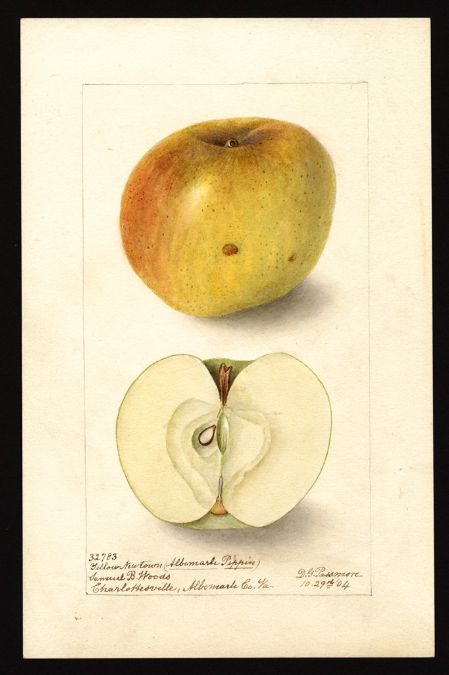
Malus domestica: Yellow Newtown (Albemarle Pippin)

POM00000527

Malus domestica: Yellow Newtown

Artist:
Passmore, Deborah Griscom, 1840-1911
Scientific name:
Malus domestica
Common name:
apples
Variety:
Yellow Newtown
Geographic origin:
Charlottesville, Virginia, United States
Physical description:
1 art original : col. ; 17 x 25 cm.

NAL note:

Alternative variety name(s): Albemarle Pippin; Charlottesville is an independent city located adjacent to Albemarle County

Specimen:
32783
Year:
1904
Date created:
1904
Rights:
Use of the images in the U.S. Department of Agriculture Pomological Watercolor Collection is not restricted, but a statement of attribution is required. Please use the following attribution statement: “U.S. Department of Agriculture Pomological Watercolor Collection. Rare and Special Collections, National Agricultural Library, Beltsville, MD 20705”

A Few Virginia Apples.

A few Virginia apples from our recent Virginia Cider Road Trip. We talked apples, walked orchards, tasted apples, and sampled Virginia ciders. Expect more posts about the details of our Virginia Cider Road Trip in the coming days.

These are just a few of Virginia apples we encountered in our travels:

Albemarle Pippin, Hewes Crab, Grimes Golden, Stayman Winesap, Arkansas Black, Smokehouse, and Harrison

Wish You Were Here: Postcards From A Virginia Cider Road Trip.


The Ciders of Summer. Our Favorite American Craft Ciders for Drinking Right Now:

LOC apple image

A Few of Our Current Favorite Summer Ciders:

West County Cider Redfield. A beautiful, pink hued cider with clean, clear tannins and lively acidity. Goes anywhere a rosé can go, and then some.

Farnum Hill Summer Cider. Effervescent, crisp, clear and bright. Well structured with a tannic finish as long and warming as a summer’s day.

Farnum Hill Cider Dooryard series: Current favorite: Batch 1214. A still cider, full of tannins and bursting with notes of quinine and pink grapefruit. A cider that quenches like a crisp gin & tonic.

Aaron Burr Bourbon Barrel Cider. Lean and sophisticated, notes of spice, citrus, apricot, and fresh apple with irrepressible bubbles providing continual refreshment.

Tieton Cider Works Apricot. The perfect outdoor entertaining cider. A fruity floral foil to tangy barbecue sauces and grilling marinades. Perfect as a base for a cider sangria and enjoying with brunch on the patio.

Eden Ice Cider Orleans Bitter. Anytime, anywhere, all summer long. On ice, mixed, shaken, stirred, spritzed, or frozen. A lovely herbal bitterness that refreshes.

Note: We have only begun to taste the variety that is American craft cider. If you have favorites, especially for summer cider drinking, please leave a comment.

Order is not indicative of preference.


Cider Review: Etienne Dupont Cidre Bouché Brut de Normandie Organic 2011: Tasting Journal: Cider52

DupontOrganic

Cider: ETIENNE DUPONT CIDRE BOUCHE´ BRUT DE NORMANDIE ORGANIC 2011

Thoughts On A Bottle: Tasting Journal:

Review Note: Solo tasting. Team tasting review to follow.

In The Glass: Slight POP on opening. Pale, light medium golden with tinges of green and amber. Clear, bright, with miniscule bead, minimal mousse. Aromas of yeast, raw and cooked apple, orchard, sous bois, and tannins. Tastes of red and green apple skins, a tad meaty, band-aid, wet grass, woody, green notes, bark, slightly leathery. Sweetness – caramel, toffee, raisins, warm sugars, honey. Celery, rhubarb, herbal. Sweet and bitter notes, light tannins, not much acidity.

2nd glass: Mineral notes, wet stones. Slate-y, green, moss, deciduous trees, mown hay. Tidal flats, hint of salt, a bit floral, freesia. As bottle warms up acidity is more apparent – now showing some legs/tears. Far off hints of pine, cedar, bark. The green woody notes cut the sweet, sugar, apple, and honey.

More: Resin, freesia, honey, butter, spice.

Empty glass: Honey, wet tanned hides, damp straw. Visible sediment.

Temperature definitely affects experience of cider. As bottle warms up more flavor and aroma qualities are apparent.

Future tastings should utilize beverage thermometer to test temperature of cider being reviewed to see how variations in temperature affect how cider is experienced.

Pairings – The Tasting Lab: None.

Overall Impressions: Sweet grass. Passing pleasing bitter notes. Intriguing perfume. Damp hay and barnyard. Resin, freesia, honey, butter, salt and stones.

Cider: ETIENNE DUPONT CIDRE BOUCHE´ BRUT DE NORMANDIE ORGANIC 2011

Maker: Domaine Dupont

Origin: Normandy, France  website: www.calvados-dupont.com

Importer: B. United International, Inc. website: www.bunitedint.com

ABV: 4.5%  Bottle: 750 ml, champagne cork

Style Notes:  USDA Organic. Unfiltered and unpasteurized. Made with naturally occurring yeasts. The fermentation is controlled by successive racking. Bottled between May and April. No sulfites added.

Fruit: Apples. 100% organically grown apples of the Bisquet, Joly Rouge, Douce Coet and Binet Rouge variety.

Makers Fruit Notes: The apples and the techniques used to make the cider are in conformity with American standards relating to organic agriculture, “N.O.P. Organic”. The apples are entirely untreated.

Note: Domaine Dupont labels each bottling with vintage year.

Makers Notes on Terrior:

www.calvados-dupont.com/en/orchards

The poor soils of the Pays d’Auge region, consisting of marl and chalky marl of the Oxfordian (secondary era) limit the growth of the trees and this leads to the production of small apples. The aromatic intensity is thereby increased and the ratio of skin to pulp helps to favour the extraction of tannins. Nitrogenous fertilisers (which swell the fruit by water retention) are not used – giving priority to quality rather than yield.

From Wikipedia:

Marl: Marl or marlstone is a calcium carbonate or lime-rich mud or mudstone which contains variable amounts of clays and silt. The dominant carbonate mineral in most marls is calcite, but other carbonate minerals such as aragonitedolomite, and siderite may be present. Marl was originally an old term loosely applied to a variety of materials, most of which occur as loose, earthy deposits consisting chiefly of an intimate mixture of clay and calcium carbonate, formed under freshwater conditions; specifically an earthy substance containing 35–65% clay and 65-35% carbonate.[1]  

  1. Pettijohn (1957), p. 410.

If you have tasting notes to add please leave a comment.
Petites pommes, gros cidre.

According to the experts at the 1911 Encyclopedia Britannica

As a rule the best cider apples are of small size. “Petites pommes, gros cidre,” say the French.

cropped-3b51100rappleprint3.jpeg

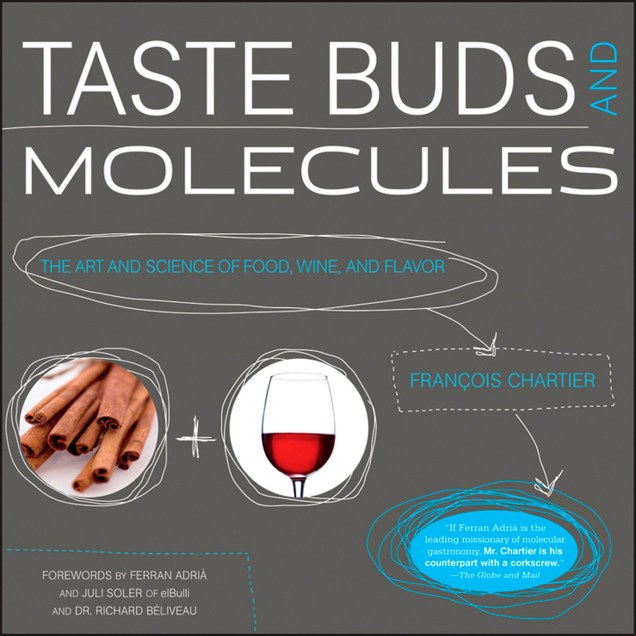
What We’re Reading: TASTE BUDS AND MOLECULES by Francois Chartier

TASTE BUDS AND MOLECULES  The Art and Science of Food, Wine, and Flavor by Francois Chartier

Exploring the harmonies of flavor.

Taste Buds and Molecules

The video is a visually stunning presentation, illustrative of the concepts explored in the book.

From the author’s website: http://www.francoischartier.ca/en/

“Three recipes, a variety of foods and liquids, all inspired by and closely linked with the queen of spices: saffron.”

“You will begin to understand the incredible harmonic possibilities in the creation of recipes in the kitchen, as well as the great harmonic comfort zone that exists between solids and liquids. This video highlights the foods and liquids that share the same aromatic profile as saffron.

Cider Review: Wandering Aengus Ciderworks WANDERLUST: Cider52

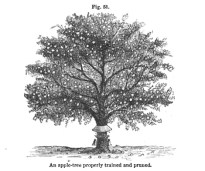
Trained&PrunedAppleTree

Cider: Wandering Aengus Ciderworks WANDERLUST

Maker: Wandering Aengus Ciderworks

Origin: Salem, Oregon

website: www.wanderingaengus.com

ABV: 7.5 %   Bottle: Available in 16.9 oz crown cap bottles, and on draft.

Makers Style Notes: Semi-Dry and tart with a “warm ginger tone”.

Fruit: Apple. From orchards in Hood River & Culver, Oregon.

Makers Fruit Notes:

At Wandering Aengus Ciderworks we press and blend over 20 cider apple varietals to craft our ciders. Our cider specific apples originate from France, England, and pre-prohibition America, but are grown now in Oregon. These heirloom varieties are essential for the depth of flavor, excellent body, and delightful aromatics of our distinctive ciders.”

Tasting Notes: Wandering Aengus Ciderworks WANDERLUST: (2) separate tastings:

In The Glass: On First Pour: Color & Clarity: Radiant brass, bright, shining and clear with clusters of varied bubbles and slight tears.

Aroma: Intense upfront aromas of ‘real’ sugars, suggesting cloying sweetness, followed by cooked apple, maple, honey, toffee, black pepper and hints of orchard. Retro-nasally (aroma on exhale) there are floral-lily notes.

Taste: The fleeting sweetness of caramelized fruit and maple syrup is followed by crisp acidity, salt and a jolt of tannins. Woody and damp, the moderate tannins add complexity and balance, creating a honeyed-mead roundness reminiscent of fall. Like Anthem Cider, Wanderlust entices with sweet aromas, then surprises with a depth and structure beyond the initial sugary nose.

Our Pairings – The Tasting Lab: Gouda, black bean hummus, guava jam, and pickled jalapeño – a favorite grilled cheese from The Queens Kickshaw – this sweet spicy sandwich and cider combination is extremely complimentary. Mesclun greens tossed in jalapeño vinaigrette enhance the sois bois dampness in the cider, and the cider brightens the ‘greeness’ of the mixed lettuces.

Specific Qualities: This cider got us thinking about qualities of  ‘sous bois’, and orchard aromas.

“sous bois“- of the orchard or of the orchard undergrowth. A very particular range of aromas representing the many elements present in the orchard ecological system, from ripe to over ripe or even rotting fruit, fruit flesh and skins, fruit leaves, tree bark, orchard grasses, and soil. Overall very fragrant, pungent, sweet, earthy, and fecund. A unique aromal experience that simultaneously reminds one of both growth and decay.

Wandering Aengus Ciderworks Wanderlust’s aromas and flavors are transporting, vividly expressing the experience of walking through an orchard, bringing the seasonal cycles keenly into consciousness. A quality we find highly desirable, especially in a well crafted cider. Wanderlust possesses a slightly ‘damp orchard’ aroma, a seemingly logical result for a cider coming from the moisture abundant temperate climate of the Willamette River Valley region of Oregon. Is this a distinctly Northwest ‘sous bois’ or a particular Wandering Aengus Cider and Anthem Cider trait? Will this trait emerge as a defining characteristic of Northwest ciders? We can’t wait to find out.

Overall Impressions: Wandering Aengus WANDERLUST is an accessible, intriguing cider, offering the simple seductive allure of sweetness followed by well structured complexity.

If you are interested in the Willamette River Valley regions climate and growing sites details, as they apply to wine grapes, you can read about the regions 7 unique AVAs here and here.

If you have tasting notes, please leave a comment.

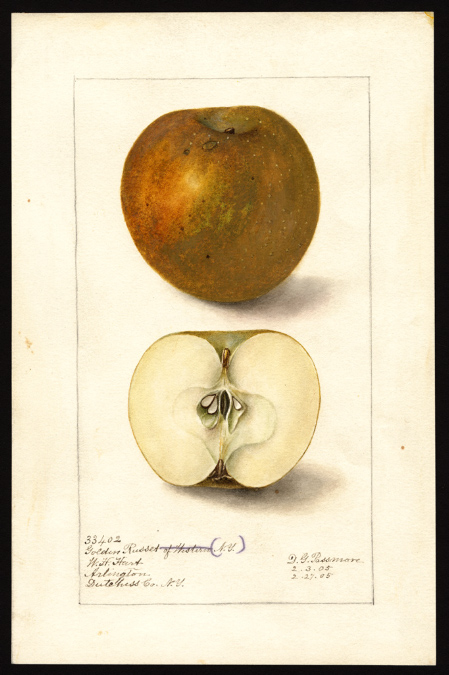
Malus domestica: Golden Russet. 1905, Arlington, Dutchess County, New York, United States

POM00001881

Malus domestica: Golden Russet

Artist:
Passmore, Deborah Griscom, 1840-1911
Scientific name:
Malus domestica
Common name:
apples
Variety:
Golden Russet
Geographic origin:
Arlington, Dutchess County, New York, United States
Physical description:
1 art original : col. ; 17 x 25 cm.
Specimen:
33402
Year:
1905
Notes on original:
Golden Russet of NY
Date created:
1905-02-27
Rights:
Use of the images in the U.S. Department of Agriculture Pomological Watercolor Collection is not restricted, but a statement of attribution is required. Please use the following attribution statement: “U.S. Department of Agriculture Pomological Watercolor Collection. Rare and Special Collections, National Agricultural Library, Beltsville, MD 20705”

Tasting Lab: Recipe: FREEZE IT! Cider and Ice Cider Granitas.

The warming temperatures inspired some cider experimentation. We made quick no fuss granitas from several ciders and ice ciders. Here are our results, and a few ideas for other freeze-ology experiments:

Tieton Cider Works Cherry Cider: A very fruit-forward, apple cider blended with cherries from Harmony Orchards fruit grown in Eastern Washington State.

Frozen Result: Refreshing. Try with a slice of lime. Tieton Cider Works Cherry Cider is a terrific base for popsicles, slushies or a fresh fruit cider sangria.

Tieton Cider Works Frost Ice Cider: A light “autumn blend” ice cider made from Harmony Orchards’ Jonagold, Pinova and Winter Banana apples.

Frozen Result: A gently sweet apple ice that would be lovely infused with bits of lemon thyme, or tarragon prior to freezing. Serve with a serious citrus twist.

Tieton Cider Works Wind: A warming bourbon barrel aged ice cider.

Frozen Result: A whiskey-like equivalent of a frozen margarita. Add fresh mint + simple syrup for mint julep-style frozen treat.

E. Z. Orchards Cidre: A French-style cidre from Oregon’s Willamette Valley.

Frozen Result: An amazing tannic treat. Palate cleansing, unexpected and addicting.

Eden Ice Cider Orleans Bitter: A recent addition to Vermont based Eden Ice Cider’s line, Orleans Bitter is a bracingly bitter refreshment, and our current go-to summer apéritif and a favorite mixology component.

Frozen Result: A perfect apéritif or digestif in delightful frozen form. No add-ons, adjuncts required or desired. Just freeze it.

Try This At Home!

DIY-HOW TO: Freeze ciders in shallow container (ice cube trays will do in a pinch) covered to seal out unwanted freezer flavors. Once frozen, scrape into granita texture, or fork-chip into a pleasing cider ice flake. Serve immediately, a small scoop is all that’s needed as flavors are intensified.

Further experiments with cider pops, cider slushies, home infused cider ices, and ice ciders over shaved ice – cider sno-cones! –  coming soon.

Notes: We favor craft ciders that use real fruit for our mixology and freezing experiments, and suggest you do the same. Be aware of the ABV% of your frozen treat –  easy to enjoy – it’s easy to forget they still contain alcohol.

For a bit more Granita How To visit Serious Eats.

Links:

Tieton Cider Works

E. Z. Orchards Cidre

Eden Ice Cider Company