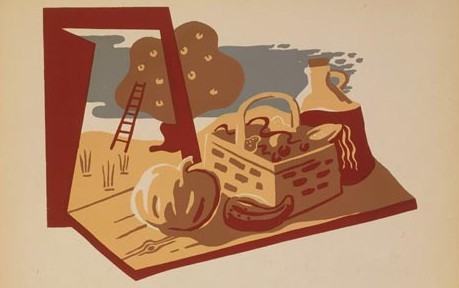
Cider is one of the good gifts which are to be received with thanksgiving.

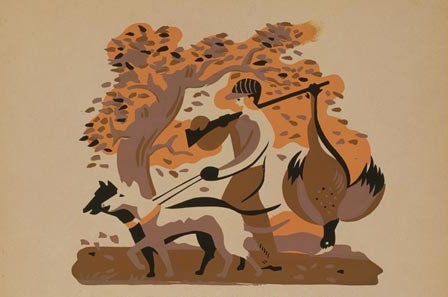
WPA October

We therefore believe that cider is one of the good gifts which are to be received with thanksgiving; and we desire to see its manufacture so perfected, that it will rank with wine in public estimation: and if our experience can add to the stock of information on this subject, we cheerfully give it, though we may encounter the reprobation of some ultra abstinence, not to say, temperance men.

From: Tilton’s Journal of Horticulture, Volume 5, J. E. Tilton & Company, 1869.

To read more about Cider and Cider-Manufacture, see Tilton’s Journal of Horticulture, Volume 5.

WPA November

Image credit:  October. Leslie Bryan Burroughs. [1938]. Library of Congress Prints and Photographs Division, WPA Poster Collection, Reproduction Number: LC-USZC4-7683.

November. Ben Kaplan. [1938]. Library of Congress Prints and Photographs Division, WPA Poster Collection, Reproduction Number: LC-USZC4-7684.


Celebrate the New York Cider Revival and Win Your Own Cider Library!

LOC apple image

It’s The 3rd Annual Cider Revival at the New Amsterdam Market in New York City Sunday, November 24.

Visit The New York State Cider & Thanksgiving Market for a chance to win Your Own Cider Library AND Support The New Amsterdam Market.

Enter to win an amazing Cider Research & Reference Library – several publishers have generously donated some terrific books – perfect for the cider & apple lover or the cider curious. For yourself or for gift giving.

WAIT There’s MORE!

The Cider Research & Reference Library includes a few bottles of real New York cider!

Stop by the main Market table on Sunday Nov. 24th, and enter to win The Cider Library with Libations! Tickets $5 each or $10 for 3. Such value! and for a good cause.

All proceeds to benefit The New Amsterdam Market.

Take a look at the books included in the Cider (and Apple) Research & Reference Library:

Cider Hard & Sweet: History, Traditions, and Making Your Own 3rd Edition by Ben Watson, The Countryman Press, 2013.
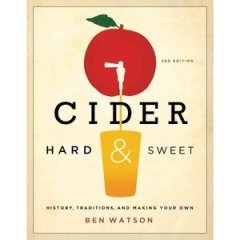
Cider Hard & Sweet

Taste, Memory: Forgotten Foods, Lost Flavors, and Why They Matter by David Buchanan, Chelsea Green Publishing, 2012.
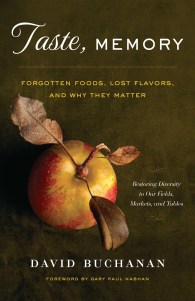
697

The New Cider Makers Handbook: A Comprehensive Guide for Craft Producers by Claude Jolicoeur, Chelsea Green Publishing, 2013.
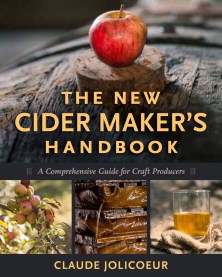
755

The Drunken Botanist by Amy Stewart, Algonquin Books, 2013.
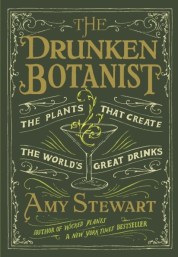
Drunken-Botanist-Cover-low-res

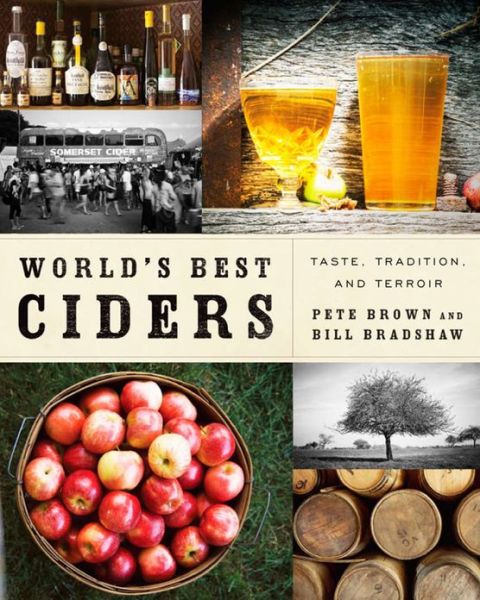
Worlds Best Ciders by Pete Brown & Bill Bradshaw, Sterling Epicure, 2013.

9781454907886_p0_v1_s600

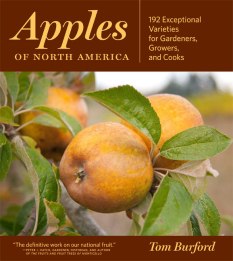
Apples of North America: 192 Exceptional Varieties for Gardeners, Growers, and Cooks by Tom Burford, Timber Press, 2013.
True Brews: How to Craft Fermented Cider, Beer, Wine, Sake, Soda, Mead, Kefir, and Kombucha at Home by Emma Christensen, 10 Speed Press, 2013.
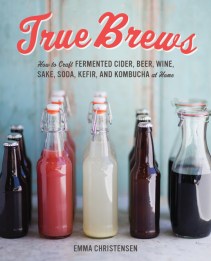
True Brews Cover

Johnny Appleseed And The American Orchard: A Cultural History by William Kerrigan, Johns Hopkins University Press, 2012.

johnny-appleseed-cover2

Apple Lovers Cookbook by Amy Traverso, W. W. Norton & Company, 2011.
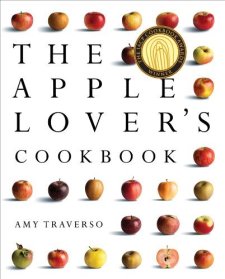
51fks+VKImL._SL500_

Cider Handbook from Scott Labs, 2013.
Scott 2013-14

Stop by the New Amsterdam Market this Sunday, November 24th, to celebrate the New York Cider Revival, enter to win this swell cider library, and get your holiday marketing done.

Link: newamsterdammarket.com

Directions: newamsterdammarket.com/map.html
What We’re Reading: The Drunken Botanist by Amy Stewart

Drunken-Botanist-Cover-low-res

What We’re Reading: The Drunken Botanist. The Plants That Create The World’s Great Drinks.

Algonquin Books, 2013.

Author: Amy Stewart

Exploring botany in a bottle, plant by fascinating plant, with cocktail recipes. Organized by process and botanical families, and styled with a nod to antique tomes, chapter headings include:

Part One: We Explore The Twin Alchemical Processes of Fermentation and Distillation from Which Wine, Beer and Spirits Issue Forth.

The entry for Apple, Malus domestica, Rosaceae (Rose Family) – includes a discussion of cider, notes regarding heritage apples, outlines apple spirit styles, and provides cocktail recipes with history notes. Pear, Pyrus communis, perry and pear spirits are examined as well.

Full of fun facts to know and tell, with Grow Your Own and Field Guide sections, and a diverse array of recipes.

This is the kind of reading you can easily enjoy with a glass of cider; educational, informative, and amusing – a very handy imbibers reference guide indeed.

Visit: drunkenbotanist.com

Resources: Your Daily Cider @HelloCider!

LOC apple image

Your Daily Cider: Tweeting Cider News from around the world, with a focus on Cider in the USA (and North America).

With @HelloCider we attempt to cover all things Cider: Cidermakers Profiles, Emerging Makers, Cider Debuts, Orcharding, Pollinators, Cider (Pome) Fruit Stories, Cider Business & Legislation, Cider Events, Cider History & Lore, Cider-Serving Establishments, Cider Reviews & Tasting Notes, Cider Recipes & Pairing, Cider Mixology, Cider Organizations, Heroes of Cider and Cider Readings & Resources. Everything Useful, Pertinent or Of Interest Re: Cider.

Find us @HelloCider

Tweeting Daily Cider Since December 2013.

Observations on Cider. No. 265. 1867.

cropped-observations.jpg

No. 265.

Observations on Cider.

From the great diversity of soil and climate in the United States of America, and the almost endless variety of its apples, it follows that much diversity of taste and flavour will necessarily be found in the cider that is made from them. To make good cider, the following general, but important, rules should be attended to. They demand a little more trouble than the ordinary mode of collecting and mashing apples of all sorts, rotten and sound, sweet and sour, dirty and clean, from the tree and the soil, and the rest of the slovenly process usually employed ; but in return they produce you a wholesome, high-flavoured, sound, and palatable liquor, that always commands an adequate price, instead of a solution of “villanous compounds,” in a poisonous and acid wash, that no man in his senses will drink. The finest cider was made of an equal portion of ripe, sound pippin and crab apples, pared, cored, and pressed, etc., with the utmost nicety. It was equal in flavour to any champagne that ever was made.

Title: Six hundred receipts, worth their weight in gold : including receipts for cooking, making preserves, perfumery, cordials, ice creams, inks, paints, dyes of all kinds, cider, vinegar, wines, spirits, whiskey, brandy, gin, etc., and how to make imitations of all kinds of liquors : together with valuable gauging tables : the collections, testing, and improvements on the receipts extending over a period of thirty years.

Author: Marquart, John  1867

Publisher: Philadelphia : J.E. Potter

via internetarchive.org

Read online: https://archive.org/details/sixhundredreceipt00marq

What We’re Reading: Scott Laboratories 2013 -2014 Cider Handbook.

Scott 2013-14

What We’re Reading: The 2013 -2014 Cider Handbook from Scott Laboratories.

September 7, 2013 Scott Laboratories announced its first ever Cider Handbook.

Known for an annual fermentation handbook, with information and resources geared to the needs of wineries, breweries, and distilleries in North America, the people at Scott Labs felt it was time to create a handbook focused on cider:

“The 60-page Handbook contains products, articles, and protocols specific to the cider industry. With cider sales in the U.S. tripling since 2007, Scott recognized that this growing market needed attention.”

The 2013-2014 Cider Handbook, is available in the U.S. and Canada. To request a free copy email info@scottlab.com. Or visit www.scottlab.com.

The end papers of the handbook features images courtesy of Albemarle CiderWorks, depicting 32 apple varieties including Golden Pearmain, Razor Russet, Black Twig, Crow Egg, and Redfield.

Apple Belts of North America circa 1914.

LOC apple image

The Standard Cyclopedia of Horticulture:

Apple belts.

In comparing the great apple growing regions of the continent it is convenient to designate each by its leading variety. In the eastern part of the continent, there is the Fameuse or Wealthy belt on the north, the Ben Davis belt on the south, and the Baldwin belt lying intermediate between these two. It is seen that varieties differ greatly as to their adaptability to different regions. The degree of soil aeration and of soil moisture and the range of atmospheric and soil temperatures are among the most important determining factors of the geographical range of commercial apple growing with any variety. Passing westward into the mid continental region it is found that the Baldwin belt does not extend west of Lake Michigan. The climatic extremes are here too severe for that variety and many of its eastern associates of a similar degree of hardiness.

In all that vast territory which extends westward from the Great Lakes these varieties disappear and do not again appear till the states of the Pacific Coast are reached. Instead the Wealthy belt extends southward till it reaches the region where Wealthy yields leadership to Ben Davis. In this connection it is worthy of note that from the Atlantic Coast westward to the Missouri River, the north margin of the Ben Davis belt approximately coincides with the southern boundary of the geological area covered by the Wisconsin drift.

Wealthy belt.

The mid-continental territory in which Wealthy is generally speaking the leading variety includes northern Illinois, the north half of Iowa, and practically all of the apple growing districts of Wisconsin, Minnesota, South Dakota, and northern Nebraska. Among the more important varieties associated with it are for the more northern parts Oldenburg, Okabenal, Patten (Patten Greening) and Malinda. Among the very hardiest of the large size apples for the North are those of the Hibernal group, but their fruit is so austere that it is esteemed of little value except for culinary uses. In the southern part of the Wealthy belt are grown hardy varieties of more or less local value such as Salome, Windsor, Black Annette and Colorado Orange varieties which as yet have not established themselves in the great world markets but which are valued where better varieties cannot be satisfactorily grown.

Ben Davis belt.

Generally speaking, Ben Davis is the leading variety in central and southern Illinois, the south half of Iowa, and the apple growing districts of Arkansas, Oklahoma, Missouri, Kansas and the south half of Nebraska. With its close kin the Gano, and the Black Ben Davis which evidently are highly colored bud sports of Ben Davis. it probably produces at least one half of the commercial apple crop in this region. Winesap and Jonathan appear to be next in order of importance with Winesap perhaps in the lead. Other important varieties are Grimes, Rome Beauty, Willow (Twig), Missouri (Pippin), Minkler and Ralls. York Imperial is gaining ground Stayman Winesap is one of the newer kinds which will be more largely planted. Delicious also is attracting attention particularly because of its agreeable dessert quality and good appearance. The Stayman and Delicious are being planted to some extent in the southern part of the Wealthy belt as Jonathan and Grimes have been.

Page 325.

From:

The Standard Cyclopedia of Horticulture:

A Discussion for the Amateur, and the Professional and Commercial Grower, of the Kinds, Characteristics and Methods of Cultivation of the Species of Plants Grown in the Regions of the United States and Canada for Ornament, for Fancy, for Fruit and for Vegetables; with Keys to the Natural Families and Genera, Descriptions of the Horticultural Capabilities of the States and Provinces and Dependent Islands, and Sketches of Eminent Horticulturists, Volume 1

Edited by Liberty Hyde Bailey, Macmillan, 1914

Read or download a copy via google here.

First Look: World’s Best Ciders: Taste, Tradition and Terroir. What We’re Reading.

9781454907886_p0_v1_s600

Authors: Pete Brown and Bill Bradshaw

Publisher: Sterling Epicure

Published: October 2013
256 pages
ISBN: 1-4549-0788-6
ISBN13: 9781454907886

Lucky to get an advance copy of World’s Best Ciders: Taste, Tradition and Terroir  (US/Can version) –  we are hunkering down with a craft cider for a good read and will report back with more detailed comments soon.

First impressions:

Hard bound and extensively illustrated with color photographs.

World’s Best Cider explores contemporary cider in the context of cider history, regional terroir, and local cider traditions. Authors Pete Brown and Bill Bradshaw examine world ciders by country, provide cider recommendations and tasting notes, and include profiles of several influential cider artisans responsible for crafting some of the world’s best ciders.

Pre-order a copy now via Amazon or Barnes & Noble.

http://www.sterlingpublishing.com

Available for purchase October 2103 at your local bookseller, including these sellers who carry books by Sterling Publishing:

In the USA

Hastings
Northshire Bookstore
Powells
University of Washington’s Bookstore
Tower.com

In Canada

Chapters Indigo
Vancouver Kidsbooks

What We’re Reading : Apples of North America by Tom Burford

Apples of North America: 192 Exceptional Varieties for Gardeners, Growers and Cooks by Tom Burford.

An essential resource for anyone interested in learning more about America’s national fruit.


Timberpress.com

Preview the book here via Timber Press.

Gleanings: Tian Shan: The Fatherland of Apples + Sweet Pilgrimage

POM00007358

Two informative articles about the wild apples of Tian Shan: The story of ancestral apples –Malus sieversii – and the great diversity occurring in the regions of Almaty, Kazakhstan, considered to be the birthplace of the apple.

Sweet Pilgrimage: Two British Apple Growers in the Tian Shan

by John Selborne

“Central Asia’s wild fruit forests are not only home to the ancestor of all domestic apples, but also hold the key to the future of apple breeding worldwide”

Published in Steppe, Issue 9, 2011. Available online.

The Fatherland of Apples

The origins of a favorite fruit and the race to save its native habitat.

By Gary Paul Nabhan

Published in the May/June 2008 issue of Orion magazine and available online.

“THE FRAGRANCE of the forest is unlike any I have ever known. The smell of ripening and rotting apples and pears fills my nostrils. At my feet, russet reds, blushing pinks, vibrant roses, and creamy yellows mottle the ground, where wildlife has half-consumed the wild fruit that makes this Kazakh forest so bountiful.”

Gary Paul Nabhan’s essay in Orion magazine is adapted from his book, Where Our Food Comes From, by Island Press, 2008