Collection No. 44: William Coxe, Manuscript + Atlas of Apples

Collection Number: 44

Collection Name: Coxe, William, Manuscript
Earliest Date: 1810
Latest Date: 1831
Linear Feet: 0.5
Collection Description: The William Coxe Manuscript is a two-volume, undated manuscript on pomology. The first manuscript volume contains 832 pages of text and sketches of fruits which William Coxe used to write A View of the Cultivation of Fruit Trees in America, published in 1817. This volume includes notes with dates ranging from 1810-1828. The notes were intended for use in a second edition of A View of the Cultivation of Fruit Trees in America, which was never published due to Coxe’s death. The second manuscript volume consists of an atlas of life-size, watercolor plates of fruit on Bristol-board, painted by Coxe’s daughters. The watercolor plates are cut out from the Bristol-board and fastened to the leaves of the book, then each name is handwritten in pen above the illustration.

Historical or Biographical Sketch: William Coxe (1762-1831), a pomologist, was one of the foremost fruit growers in America who experimented with new varieties of fruits at his home in Burlington, New Jersey. He collected specimens from the United States and abroad. A View of the Cultivation of Fruit Trees in America is a classic of American pomological literature. It is considered by many specialists as the illustrative evidence of fruit culture during the colonial and revolutionary period of the new American nation. William A. Taylor, assistant pomologist, U.S. Department of Agriculture, read an 1857 article in Country Gentleman about the manuscript. Through the use of Library of Congress geneological materials, Taylor was able to contact Coxe’s family members and locate the manuscripts. The grandchildren of Elizabeth (Coxe) McMurtrie, one of Coxe’s daughters, donated the manuscripts to Secretary of Agriculture D. F. Houston in 1915.

ProcessedNo, contact Special Collections.
Formats: Agricultural Art and Memorabilia
Digitization Status: Portion of collection digitized

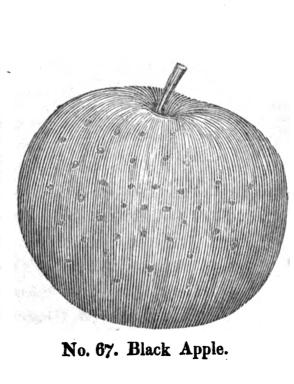
No.67

THE SEARCH FOR A VALUABLE UNPUBLISHED WORK OF AMERICAN POMOLOGY

From SCIENCE

NEW SERIES. VOLUME XLIV JULY-DECEMBER, 1916 NEW YORK

A VALUABLE UNPUBLISHED WORK ON POMOLOGY

Most horticulturists are doubtless familiar with “A View of the Cultivation of Fruit Trees of America,” published in 1817 by “William Coxe, of Burlington, N. J., who has been called “The Father of American Pomology,” but probably few are aware of the existence of an unpublished book of colored drawings of the fruits that were illustrated in this work by wood cuts. On pages 225-226 of the Country Gentleman, of Albany, ~N. Y., for April 2, 1857, there was published by E[dmund] L[aw] R[ogers], Baltimore, Md., an account of the activities of Mr. Coxe, in which it is stated that he had intended publishing a second edition of the work, accompanied by colored engravings for which natural-size water-color drawings had been prepared by his daughters. The publication of this second edition was prevented by Mr. Coxe’s death in 1831. About twenty years ago this article came to the attention of Mr. William A. Taylor, then assistant pomologist of the TJ. S. Department of Agriculture, and a number of letters were written in an effort to locate the colored drawings, but without success. The matter was then dropped until the spring of 1915 when, in a conversation regarding some old horticultural catalogs, Mr. Taylor related these facts to the writer who suggested that it might still be possible to locate the unpublished colored plates through methods used by genealogical research workers.

The search was begun by looking up at the Library of Congress historical and genealogical works which might give information regarding the descendants of William Coxe, with the result that a list of his children was obtained, with some of their marriages. From this it was learned that Philadelphia and vicinity was at present the most likely locality to search for his descendants. Addresses were obtained of several of the Coxe family in that vicinity and a form letter sent to all of them giving the object of the inquiry, with the result that a chart of this branch of the family, only recently published, was secured by the writer. This gave the names of all descendants to date, but without addresses, although the places of births were usually given. With this clue several city and tele- phone directories were consulted and addresses of most of the descendants obtained. About twenty-five copies of the form letter were then sent to these addresses with the almost immediate result of six replies giving the address of the probable possessor of the work, followed the next day by a letter from one of the twenty- five addressed acknowledging the possession of the work.

It is with great pleasure that announcement is made of the donation of the unpublished colored drawings of fruits to the Library of the U. S. Department of Agriculture by the grandchildren of Mrs. Elizabeth (Coxe) McMurtrie, a daughter of William Coxe, by whom most of the paintings were made. The drawings are bound and in an excellent state of preservation. The character of the work shows a high degree of skill on the part of the artist in depicting fruits; and the positive identification of all the earlier descriptions and illustrations, some of which have long been in doubt, will now be possible. The work has been placed in a fireproof building and it is expected that the additional safeguard of a fireproof safe for this and similar books will be provided at an early date. The drawings are accompanied by the bound manuscript upon which the published work was based, to which have been added numerous notes intended for a second edition.

Many of the notes bear dates ranging from 1810 to 1828 and it probable that the water-color work was largely done in the early part of this period, for several varieties are illustrated which according to the manuscript did not live long, or were destroyed as being of little value or particularly subject to disease.

P. L. RlCKER Bureau of Plant Industry

July 14, 1916

link: http://archive.org/stream/science441916mich/science441916mich_djvu.txt
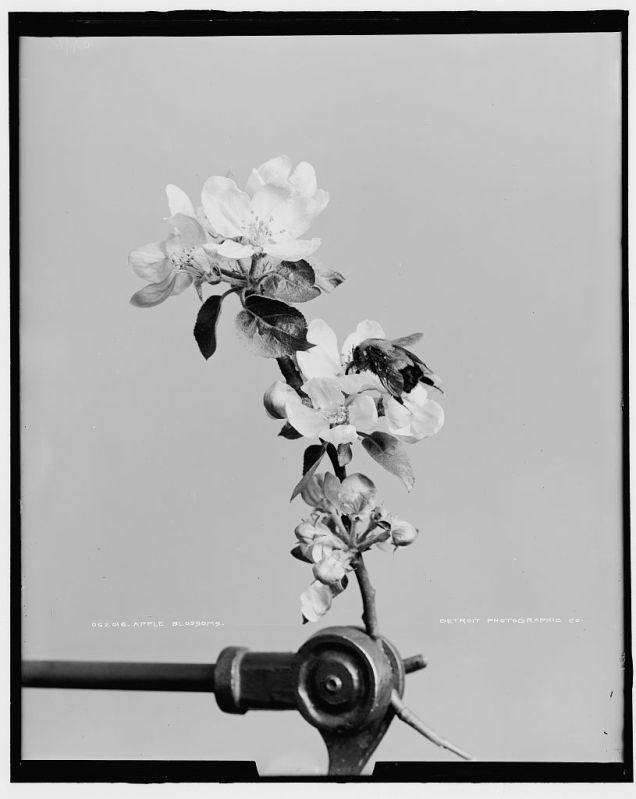
Portrait: Apple Blossoms circa 1906

4a10845v-LOC

Detroit Publishing Company Collection circa 1906

Credit Line: Library of Congress, Prints & Photographs Division, Detroit Publishing Company Collection,

[reproduction number, LC-D4-16374]

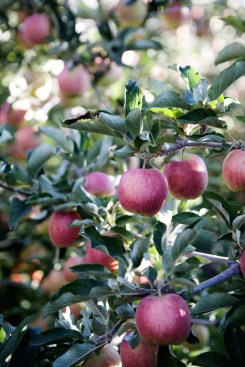
Discover the Craft of Documentary Food Photographer Clare Barboza.

harmony2

Clare Barboza is a Seattle-based visual artist and documentary food photographer focused on capturing the telling details that illuminate the stories behind what we eat, make, raise, and grow.

Her evocative images are featured in Rowan Jacobsen’s upcoming book, Uncommon Apples. Glimpse a few portraits of these unique apples: Knobbed Russet, Blue Pearmain, and wild Khazhaks – here. Clare discusses her experiences shooting the book, and shares beautiful pome fruit images, in her blog post a whole lotta apples.

Enjoy the images Clare graciously shared with us, and explore her work further at ClareBarboza.com

i

i

Image: Harmony Orchards

All images courtesy of the photographer. All images copyright © Clare Barboza.

Portrait: Apple Blossoms circa 1905

4a21389v-LOC

Detroit Publishing Company Collection circa 1905

Credit Line: Library of Congress, Prints & Photographs Division, Detroit Publishing Company Collection,

[reproduction number,LC-D4-62016]

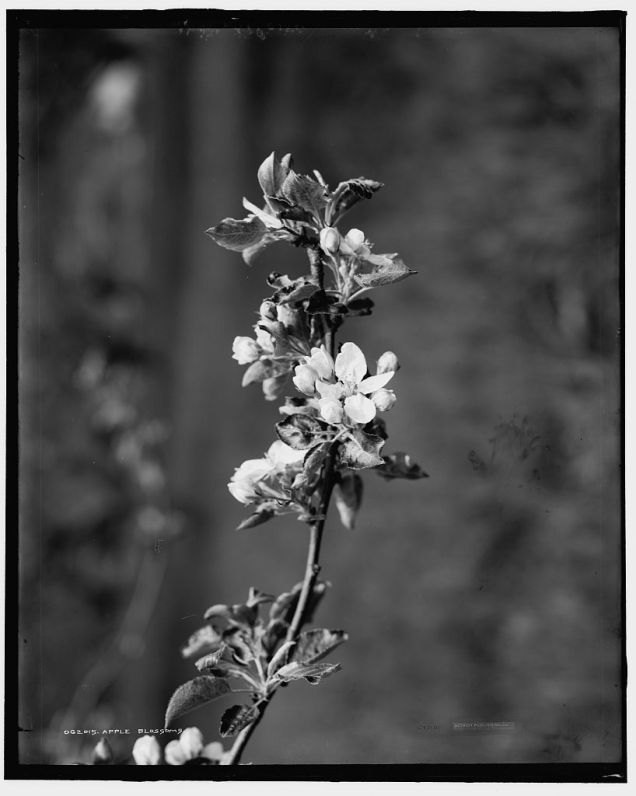
Portrait: Apple Blossoms

4a21388vLOC

Detroit Publishing Company Collection circa 1905

Credit Line: Library of Congress, Prints & Photographs Division, Detroit Publishing Company Collection,

[reproduction number, LC-D4-62015]

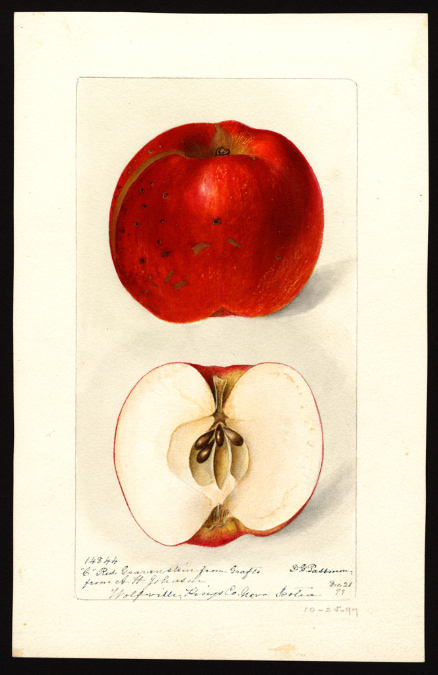
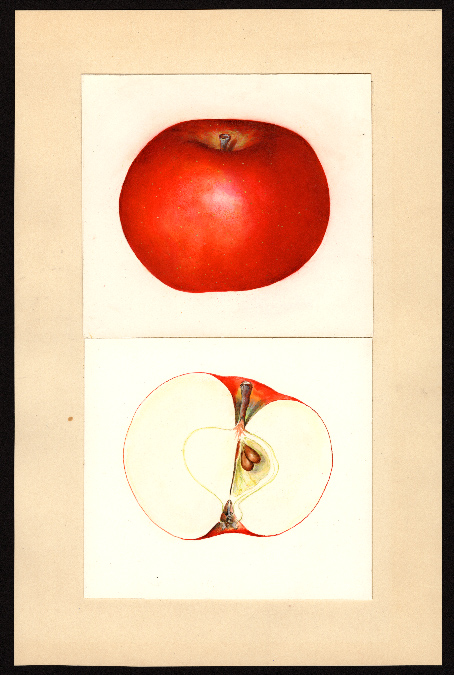
Malus domestica: Red Gravenstein, 1897. Wolfville, Kings County, Nova Scotia, Canada.

POM00003059wolfvilleMalus domestica: Red Gravenstein

Artist:
Passmore, Deborah Griscom, 1840-1911
Scientific name:
Malus domestica
Common name:
apples
Variety:
Red Gravenstein
Geographic origin:
Wolfville, Kings County, Nova Scotia, Canada
Physical description:
1 art original : col. ; 16 x 25 cm.
Specimen:
14844
Year:
1897
Notes on original:
From Grafts
Date created:
1897-12-21
Rights:
Use of the images in the U.S. Department of Agriculture Pomological Watercolor Collection is not restricted, but a statement of attribution is required. Please use the following attribution statement: “U.S. Department of Agriculture Pomological Watercolor Collection. Rare and Special Collections, National Agricultural Library, Beltsville, MD 20705”

What is a Sport: Darwin, Mutants, Apples & The Red Gravenstein.

LOC apple image

SPORT: 

Spontaneous somatic mutation and mutant cultivars.

Mutations are often called bud variations, bud mutations, somatic mutations, bud sports or briefly, sports.

Darwin (1868) defined bud variations as ‘all changes in structure or appearance which occasionally occur in full-grown plants in their flower-buds or leaf buds’ and in many cases ascribed these ‘changes’ to ‘spontaneous variability.’

source: Mutation Breeding: Theory and Practical Applications 1988

A. M. van Harten, Agricultural University, Wageningen, The Netherlands

SPORT:

A sudden variation in habit of growth or blossom color from the rest of the plant or others plants of its kind. Caused by a genetic change that may be accidental or spontaneous, or intentionally induced.

source: www.botany.com

SPORT: 

In botany, a sport or bud sport is a part of a plant that shows morphological differences from the rest of the plant. Sports may differ by foliage shape or color, flowers, or branch structure. Sports with desirable characteristics are often propagated vegetatively to form new cultivars that retain the characteristics of the new morphology.

source: wikipedia.org

See: Red Gravenstein. This variety is a sport (natural genetic mutation) of the Gravenstein apple.

Species: Malus domestica. Parentage: Sport of Gravenstein. Origin: Washington, United States.

source: orangepippin.com

Malus domestica: Red Gravenstein, 1935. Geneva, Ontario County, New York, United States.

POM00003062REDGrav1910NY

Malus domestica: Red Gravenstein

Artist:
Arnold, Mary Daisy, ca. 1873-1955
Scientific name:
Malus domestica
Common name:
apples
Variety:
Red Gravenstein
Geographic origin:
Geneva, Ontario County, New York, United States
Physical description:
1 art original : col. ; 17 x 25 cm.
Specimen:
113201
Year:
1935
Date created:
1935-12
Rights:
Use of the images in the U.S. Department of Agriculture Pomological Watercolor Collection is not restricted, but a statement of attribution is required. Please use the following attribution statement: “U.S. Department of Agriculture Pomological Watercolor Collection. Rare and Special Collections, National Agricultural Library, Beltsville, MD 20705”

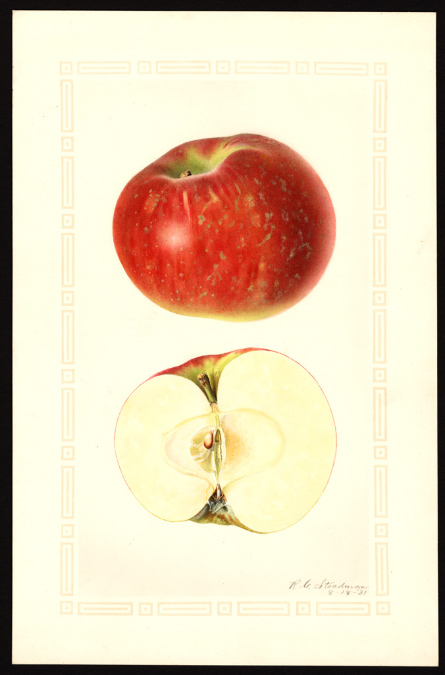
Malus domestica: Red Gravenstein, 1931. Rosslyn, Arlington County, Virginia, United States.

POM00003064RedGrav VA1931

Malus domestica: Red Gravenstein

Artist:
Steadman, Royal Charles, b. 1875
Scientific name:
Malus domestica
Common name:
apples
Variety:
Red Gravenstein
Geographic origin:
Rosslyn, Arlington County, Virginia, United States
Physical description:
1 art original : col. ; 17 x 25 cm.
Specimen:
8131931
Year:
1931
Notes on original:
Section J, Row 25, Tree 3
Date created:
1931-08-18
Rights:
Use of the images in the U.S. Department of Agriculture Pomological Watercolor Collection is not restricted, but a statement of attribution is required. Please use the following attribution statement: “U.S. Department of Agriculture Pomological Watercolor Collection. Rare and Special Collections, National Agricultural Library, Beltsville, MD 20705”