Malus domestica: Apple Blossom: Subject Apple Frost Injury

POM00001279

Malus domestica

Artist:
Newton, Amanda Almira, ca. 1860-1943
Scientific name:
Malus domestica
Common name:
apples
Geographic origin:
Woodwardville, Anne Arundel County, Maryland, United States
Physical description:
1 art original : col. ; 17 x 24 cm.
NAL note:
Painting is of an apple blossom; Assigned specimen number
Specimen:
[00010]
Year:
1905
Notes on original:
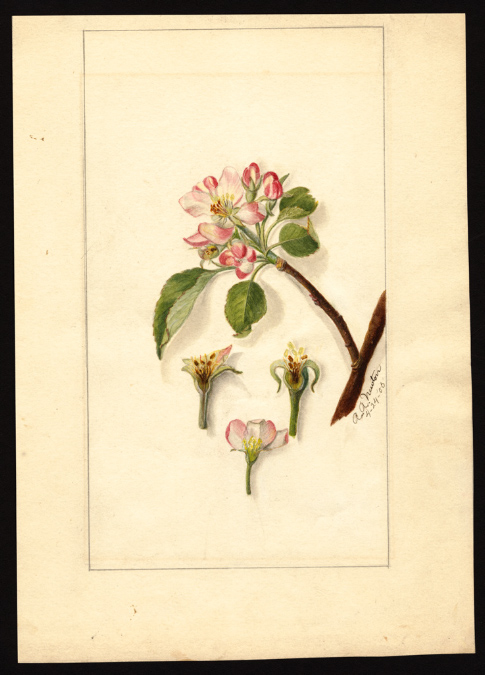
Subject Apple Frost Injury. Apple blossoms from Woodwardville, Maryland. This shows the characteristic injury by frost which occurs when the apples are in bloom or in bud. The pistils and ovules being partly killed and the floral envelopes wholly uninjured. The stamens are mostly uninjured, some of the inner ones having gone down with the ovary. The youngest blossoms in bud at the time were not injured. The most advanced flowers were hurt the most.
Date created:
1905-04-24
Rights:
Use of the images in the U.S. Department of Agriculture Pomological Watercolor Collection is not restricted, but a statement of attribution is required. Please use the following attribution statement: “U.S. Department of Agriculture Pomological Watercolor Collection. Rare and Special Collections, National Agricultural Library, Beltsville, MD 20705”

IAMCIDER: Photographer Bill Bradshaw. Cidergrams.

#cider Screen Shot 2013-04-17 at 19.39.44 Screen Shot 2013-04-17 at 19.39.49 Screen Shot 2013-04-17 at 19.41.08 Screen Shot 2013-04-17 at 19.40.33 Screen Shot 2013-04-17 at 19.40.13
Screen Shot 2013-04-17 at 19.40.25Screen Shot 2013-04-17 at 19.40.19
All images courtesy of the photographer. All images copyright © Bill Bradshaw
IAMCIDER. Bill Bradshaw
Twitter:  @IAMCIDER
Skype:  the.bill.bradshaw

Terminology: Defining The Fruit

061_medium

Defining the Fruit 

From The National Association Of Cider Makers “The voice of the UK’s cider makers”.

website: cideruk.com 

Cider apple varieties are divided into four categories according to the relative proportion of acidity and tannin:

Sweet varieties are the blandest of the four categories, being low in both components. They are useful to blend with ciders from the more strongly flavoured varieties, which, by themselves, would be too extreme in taste and aroma to be palatable. Typical examples of sweet apples are Sweet Coppin, in use to a small extent, and Court Royal which was used extensively at one time but rarely used nowadays.

Bittersweet apples impart the characteristic flavour of English ciders; as the name implies they are low in acid and high in tannin. The latter is responsible for two sensations on the palate – astringency and bitterness. In the bittersweet apple, there is a whole range of combinations of these two characteristics, varying from little astringency coupled with intense bitterness to very marked astringency coupled with mild bitterness. Typical bittersweets are Dabinett, Yarlington Mill and Tremlett’s Bitter.

Sharp varieties, so called because the predominant characteristic is that of acidity, are encountered less frequently today, possibly because culinary fruit, which has a similar flavour balance, can be substituted for this class. There are, however, recognised full sharp cider varieties, two of which are Crimson King and Brown’s Apple.

Bittersharp is the fourth class of cider apple. These are fairly high in acid and tannin, although the latter component does not show the wide range of flavours exhibited by the bittersweet.  Stoke Red is a good example.

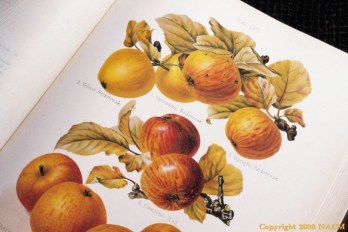
Image: 1860s Cider Apples from The Herefordshire Pomona. Illustrations by Miss Ellis and Miss Bull.

Image and definitions courtesy of NACM. Used by permission.
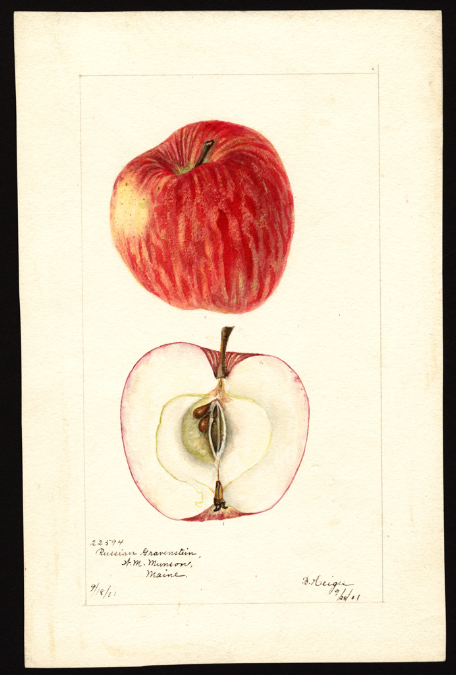
Malus domestica: Russian Gravenstein, 1901. Maine.

Russian Gravenstein

Malus domestica: Russian Gravenstein

Artist:
Heiges, Bertha
Scientific name:
Malus domestica
Common name:
apples
Variety:
Russian Gravenstein
Geographic origin:
Maine, United States
Physical description:
1 art original : col. ; 17 x 25 cm.
Specimen:
22594
Year:
1901
Date created:
1901-09-28
Rights:
Use of the images in the U.S. Department of Agriculture Pomological Watercolor Collection is not restricted, but a statement of attribution is required. Please use the following attribution statement: “U.S. Department of Agriculture Pomological Watercolor Collection. Rare and Special Collections, National Agricultural Library, Beltsville, MD 20705”

Great Cider Starts With Great Fruit.

We Like Cider.

And you can’t really like cider without being fairly keen on apples.

To quote the esteemed makers at Farnum Hill Cider & Poverty Lane Orchards:

Anywhere, in any words, great cider starts with great fruit.”

We Like Apples.

Expect more about apples – orchards, pollinators, varietals, history, tastings, fruit expression.

We Are Apple Drinkers.*

LOC apple image

*A nice turn of phrase from the always interesting American Orchard.

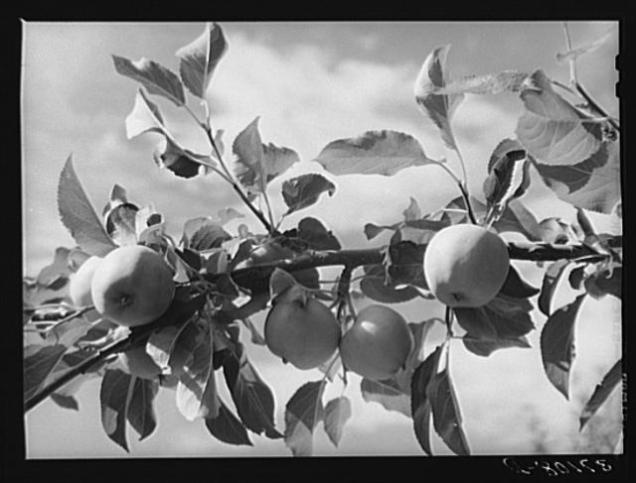
Caption: Apples are one of the main fruit crops along the Rio Pueblo at Dixon, New Mexico. 1940

8b25707r

We use this Russell Lee image from The Library of Congress often as a detail and graphic element in our posts. Here it is presented complete and with links and record details.

Apples are one of the main fruit crops along the Rio Pueblo at Dixon, New Mexico

Creator(s): Lee, Russell, 1903-1986, photographer

Site: Prints & Photographs

Original Format: Photo, Print, Drawing

Date: July, 1940

Collections:Farm Security Administration/Office of War Information Black-and-White Negatives

Part of: Farm Security Administration – Office of War Information Photograph Collection (Library of Congress)

Credit Line: Library of Congress, Prints & Photographs Division, FSA/OWI Collection,

Call Number: LC-USF34- 037108-D [P&P]

Repository: Library of Congress Prints & Photographs Division Washington, DC 20540 http://hdl.loc.gov/loc.pnp/pp.print

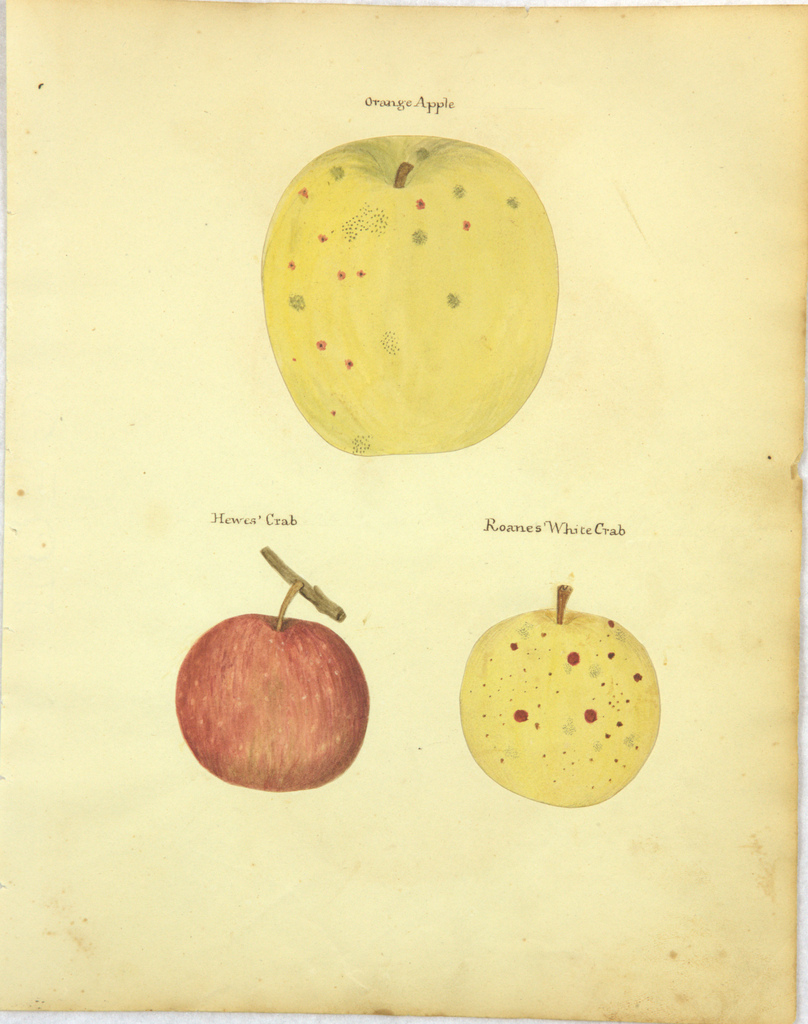
From The Atlas: Orange Apple, Hewe’s Crab & Roane’s White Crab

Orange Apple

Image Credit: Special Collections, National Agricultural Library.

Collection: William Coxe Manuscript. Contains Manuscript and Atlas. 

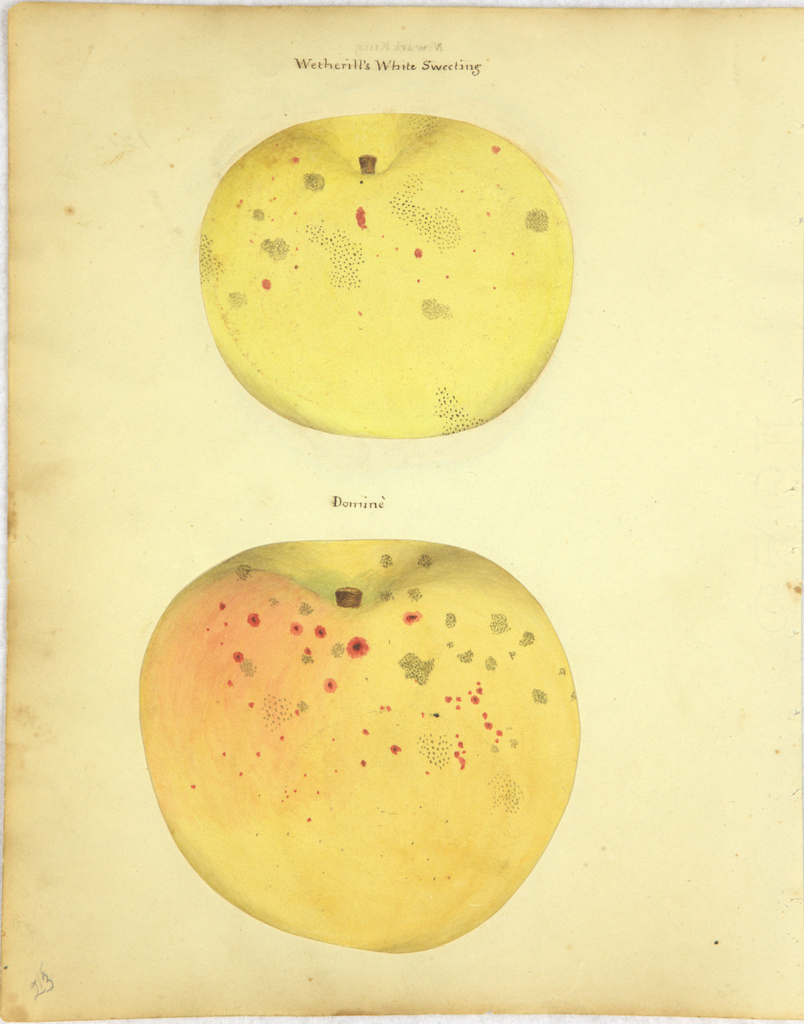
From The Atlas: Wetherill’s White Sweeting & Domini Apples

Wetherill's White Sweeting

Image Credit: Special Collections, National Agricultural Library.

Collection: William Coxe Manuscript. Contains Manuscript and Atlas. 

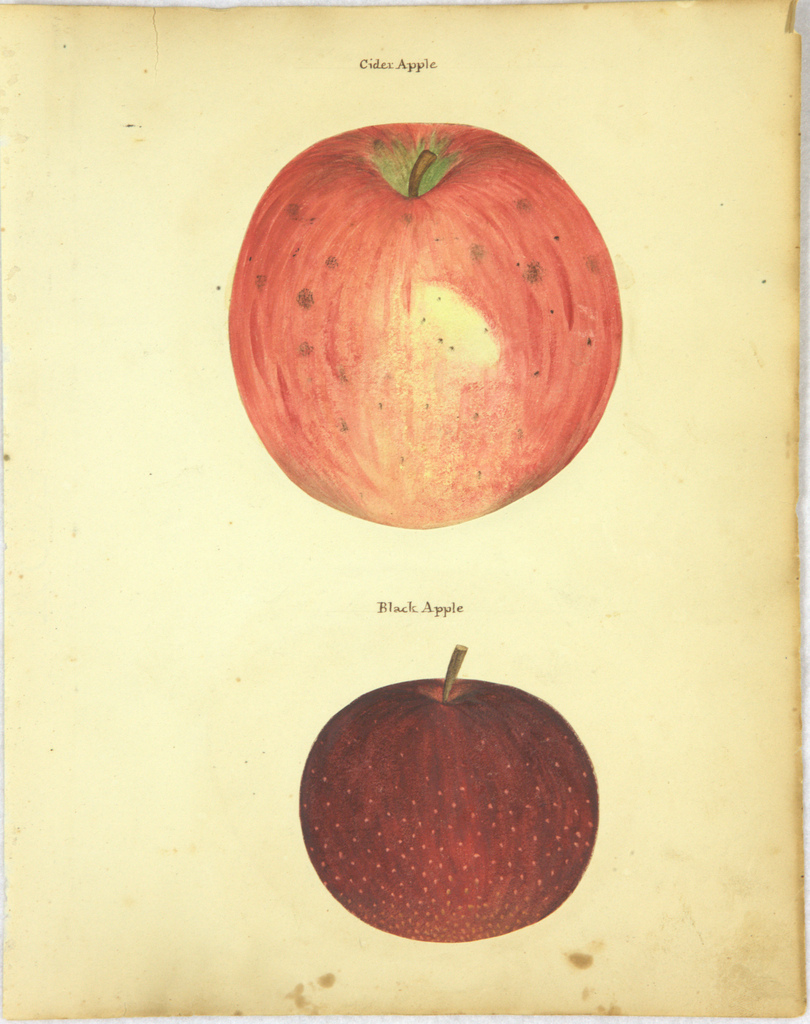
From The Atlas: Cider Apple & Black Apple


CiderApple&blackapple

Image Credit: Special Collections, National Agricultural Library.

Collection: William Coxe Manuscript. Contains Manuscript and Atlas. 

The Unpublished Atlas: A List of Apples. A View of the Cultivation of Fruit Trees by William Coxe.

Images of the 24 pomological watercolor illustrations, on 12 plates, listed below, are posted on at USDA National Agricultural Library website in the Rare Books Special Collections Image GalleryThe complete Atlas is digitized, but not all images from the Atlas are currently available in Rare Books Special Collections Image Gallery.
The originals are full size watercolor illustrations on Bristol board, created by Elizabeth Coxe McMurtry and her sisters to illustrate the unpublished second edition of their father’s book.
It is possible these images were painted circa 1817-1831, making them some of the earliest known color pomological illustrations of American fruits. An 1857 article in Country Gentleman magazine describes the watercolor illustrations in detail, indicating they were executed prior to that date.
Pomological illustrations currently on view online, as thumbnails, in the Rare Books Special Collections Image Gallery:
Note: The Atlas contains many more illustrations. The images posted are only a selection.
Apples:
Domini
Hewe’s Crab
Roane’s White Crab
Orange Apple
Grey House
Winesap
Harrison
Pomme d’Apis or Lady Apple
Poveshon
Siberian Crab
Styre
Loan’s English Pearmain
Rambo or Romanite
The Cider Apple
The Black Apple
White Sweet or Wheterills White Sweeting
Glouschester White
Fearn’s Pippin
Newton Pippin
Preistly
Esopus Spitzenburg
Vendervere
Fama Gusta
Peaches:
Red-Cheek Malacotan
Early Anne
Monstrous Pavie