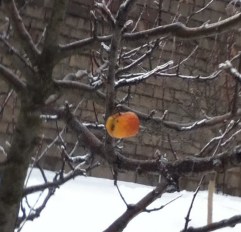
A solitary Lady Apple or Pomme d’Api outside the walls of the Bonnefort Cloister garden at The Cloisters in New York City, January 5th, 2014.
A solitary Lady Apple or Pomme d’Api outside the walls of the Bonnefort Cloister garden at The Cloisters in New York City, January 5th, 2014.
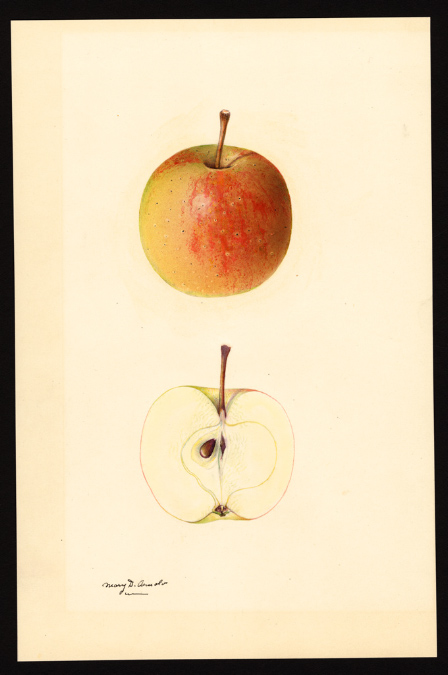
Smith, Jones, Plumb and Penn. Cider Apples of Yesteryear.
The National Agricultural Library’s collection of pomological watercolor illustrations includes images of cider apples of renown such as the Harrison, Virginia or Hewe’s Crab, Ablemarle and Newtown Pippins.
Also documented by the artists working for the U.S. Department of Agriculture (USDA), Division of Pomology are less well-known American cider apples such as the Smith Cider, Jones Cider, Plumb Cider and the Penn Cider.


Image credit: “U.S. Department of Agriculture Pomological Watercolor Collection. Rare and Special Collections, National Agricultural Library, Beltsville, MD 20705”
 Newark Cider .
Gleanings: On Apples, Terroir, and Newark Cider.
Concerning Newark’s famous old time cider the following specific information on the ingredients thereof will be new and of interest to many readers. Our informant was the late John Oakes of Bloomfield. He said some time ago:
“Quite a large portion of the land in Bloomfield in the last century, the eighteenth and the first third of this the nineteenth, was in farms. They were small, comparatively few of more than fifty acres. The farmers raised on the land rye, oats, Indian corn, potatoes, and buckwheat; very little wheat and hay. They had large orchards of apples for making cider which under the name of ‘Newark cider’ was known over a large extent of country, shipped to the South, as well as to points in these parts. It was celebrated as the best. It was made the best from two kinds of apples mixed, two-thirds being Harrison apples, which were small and a light yellow color, a little tart and very juicy; and one third being the Canfield apple, large, red and sweet, both seedlings having originated here.”
Thus Newark cider was the product of Newark fruit and Newark invention. -JFF
Proceedings of the New Jersey Historical Society, Volume 3 . New Jersey Historical Society, 1918 – New Jersey.
And from: The Western Agriculturist, and Practical Farmer’s Guide. Robinson and Fairbank, 1830. Nicholas Longworth Esq. – of the famed Catawaba wines of Ohio, a man considered the father of American grape culture – writes that the Harrison, Campfield, and Graniwinkle
“are the apples from which the celebrated Newark cider is made.”
Longworth experimented growing Harrison and Virginia crab apples in Ohio for cider, but he failed to achieve a wholly successful result, and details his effort thus:
“I obtained from Newark, New Jersey, many years since, some trees of the Harrison apple from which their celebrated cider is made. The cider I made from them was aqueous and seldom retains its sweetness till the proper season for bottling.
The best Newark cider is made on the Newark mountains on a poor stony soil.
On a recent visit to that state I particularly examined this apple in their orchards to endeavour to ascertain the difference. I found the apples knotty, and of a less size than the same fruit in the West, unfit for the table but evidently possessing more of the saccharine principle. The Virginia crab retains all its fine cider qualities with us in great perfection. No soil, no climate. no cultivation can make it edible. To reconcile these apparent contradictions writers have furnished us with no clue and we must endeavour to deduce them from analogy and reason.”
Proceedings Of The Farmers Club
APPLE GRAFTS
Mr Daniel B. Bruen, Newark, N. J. now brought forward a of cions of the apple, and read in connection therewith a report, of which the following is the substance:
This is the Harrison apple; its origin is in Orange, Essex county, N. J. and named after Simeon Harrison, owner of the farm. It is the most celebrated cider known. It bears large crops, fruit small. Eight bushels produce one barrel of cider; it is very rich in saccharine matter. This, the Campfield apple, has its origin in Newark, named after Matthew Campfield, one of the first settlers of Newark, almost universally used in the proportion of one-third with the Harrison in manufacturing the celebrated Newark cider. The fruit is rich in saccharine matter, and keeps well until spring; good for cooking, very little better for table use than a well-soaked cork from cider bottle.
Annual Report of the American Institute, of the City of New York. American Institute of the City of New York, 1869.
Pomme Fruit: Gravenstein Apples In The Russian River Valley, Sonoma County, California.
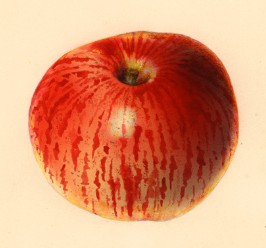
The Sebastopol Gravenstein, a vividly colored, aromatic, flavorful heirloom apple is historically important in the Russian River Valley. So dominant in the region, the ribbon of roadway running through the acres of orchards became known as The Gravenstein Highway – honoring the apples prolific presence. Declining prices for processing apples, the increasing popularity of other more ‘commercially viable’ apples, and a booming West Coast wine industry, all led to Gravenstein orchards being ripped out to make way for the extremely lucrative wine grapes that now populate the region.
David Karp, writing for the LA Times:
“Gravenstein is still a favorite in northern Europe and is cultivated from Nova Scotia to the Pacific Northwest, but it reaches its greatest perfection in the Sebastopol district of western Sonoma County, at the border of the maritime and inland climatic zones, where the morning fog gives way to a moderately hot afternoon sun. The area’s fine, sandy loam soil is well suited to apples. The huge trees, grafted on seedling rootstock, develop roots deep enough to survive the dry summers without irrigation.”
Concerned Sonoma County cider makers are working to revive interest in this heirloom apple by focusing on the Gravenstein’s many desirable cider worthy traits, crafting ‘Gravs’ into unique ciders that celebrate and express the heritage of the apple and the region.
Saving Apples by Making Cider. Drink a Gravenstein Today.
Find A Gravenstein Cider:
Tilted Shed Ciderworks: Graviva! Semi Dry Cider
Apple Sauced Cider: Save The Gravenstein! Cider
Devoto Orchards Cider: Gravenstein first release October 14, 2013


Gleanings (sources for further reading):
LATimes: The future of Gravenstein apples hangs on a thin stem by David Karp
NPR: Gravenstein Apples: The End Of Summer In A Fruit by Nicole SpIridakis
Zester Daily: The Fight To Save Sonoma’s Gravenstein Apple by Tina Caputo
Slow Food USA Ark of Taste: Sebastopol Gravenstein
Slow Food USA Sebastopol Gravenstein Apple Presidia
Gravenstein apple image (detail) – credit: “U.S. Department of Agriculture Pomological Watercolor Collection. Rare and Special Collections, National Agricultural Library, Beltsville, MD 20705”
Link: The future of Gravenstein apples hangs on a thin stem. July 12, 2013 By David Karp. Special to the Los Angeles Times


Circa 1817 image (left) from the unpublished atlas of Wm. Coxe. Illustration executed by one of Mr. Coxe’s daughters, possibly Elizabeth (Coxe) McMurtrie.
Image Credit: Special Collections, National Agricultural Library.
1899 image (right) painted by Deborah Griscom Passmore, an illustrator for the USDA.
Image credit : “U.S. Department of Agriculture Pomological Watercolor Collection. Rare and Special Collections, National Agricultural Library, Beltsville, MD 20705″
http://usdawatercolors.nal.usda.gov/
According to a letter to the Editor (extract presented below) of The Country Gentleman, from Mr. E. L. R. of Baltimore, Md:
Mr William Coxe was for several years a member of Congress from New Jersey but such was his fondness for pomology that notwithstanding the many demands upon his time in consequence of his political and other pursuits he still found leisure to collect materials for an enlarged and elegant edition of his work on Fruit Trees.
This unfortunately, he did not live to bring to perfection. It had been his intention that the second edition should have contained beautiful colored engravings to accompany the descriptions of each of the fruits mentioned in his book. For this purpose his daughter, Mrs McMurtrie still living in Philadelphia, and her accomplished sisters had prepared numerous accurate drawings of life size upon Bristol board of the fruits to be represented and then painted them in water colors with wonderful fidelity to nature and with such delicacy of touch and such genuine artistic sense of color that it is greatly to be regretted that these evidences of early American art have not seen the light in the form originally intended.
source: The Country Gentleman, Volume 9 via Google eBook
L. Tucker, 1857
Collection Number: 44 Collection Name: Coxe, William, Manuscript
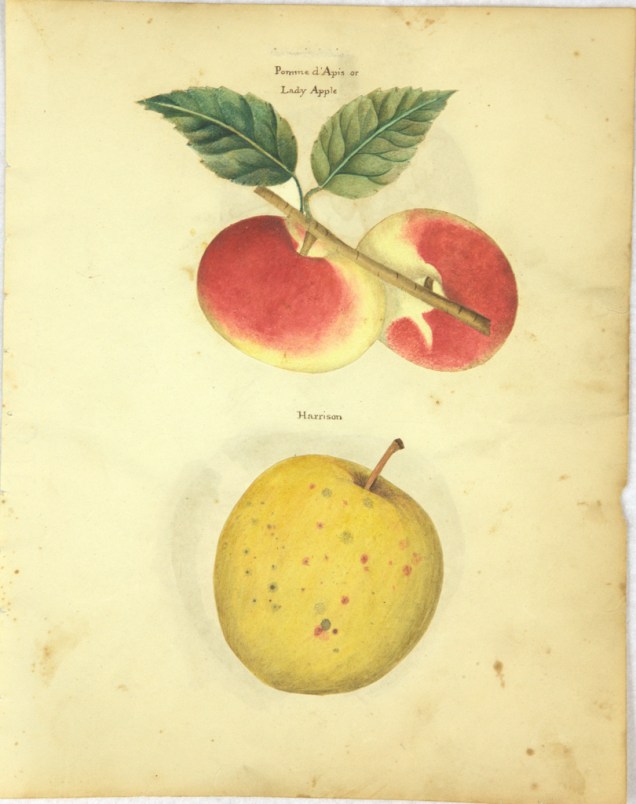
Image Credit: Special Collections, National Agricultural Library.
Collection: William Coxe Manuscript. Contains Manuscript and Atlas.
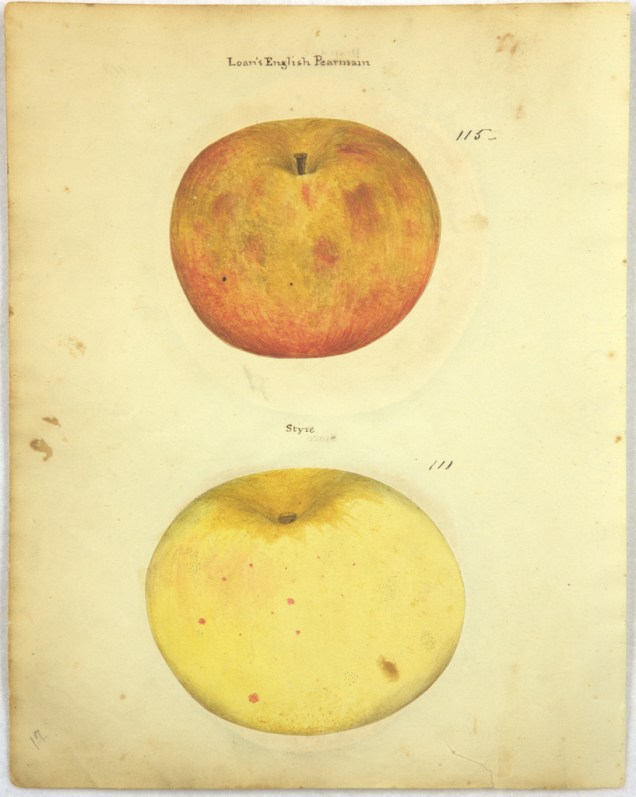
Image Credit: Special Collections, National Agricultural Library.
Collection: William Coxe Manuscript. Contains Manuscript and Atlas.
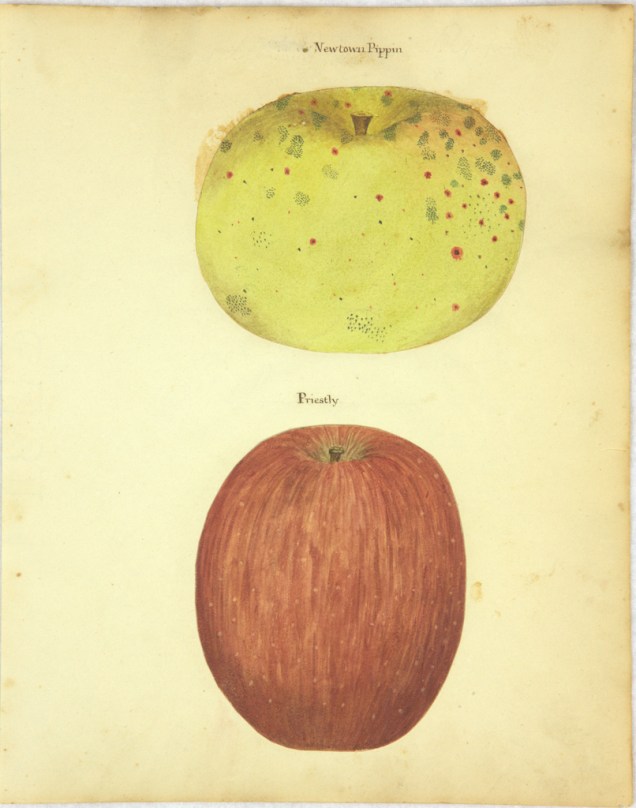
Image Credit: Special Collections, National Agricultural Library.
Collection: William Coxe Manuscript. Contains Manuscript and Atlas.
 UnitedStatesofCider