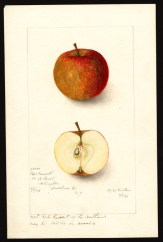
Isle La Motte, Grand Isle County, Vermont, United States
Physical description:
1 art original : col. ; 16 x 25 cm.
Specimen:
66348
Year:
1913
Date created:
1913-10-29
Rights:
Use of the images in the U.S. Department of Agriculture Pomological Watercolor Collection is not restricted, but a statement of attribution is required. Please use the following attribution statement: “U.S. Department of Agriculture Pomological Watercolor Collection. Rare and Special Collections, National Agricultural Library, Beltsville, MD 20705”
Use of the images in the U.S. Department of Agriculture Pomological Watercolor Collection is not restricted, but a statement of attribution is required. Please use the following attribution statement: “U.S. Department of Agriculture Pomological Watercolor Collection. Rare and Special Collections, National Agricultural Library, Beltsville, MD 20705”
Use of the images in the U.S. Department of Agriculture Pomological Watercolor Collection is not restricted, but a statement of attribution is required. Please use the following attribution statement: “U.S. Department of Agriculture Pomological Watercolor Collection. Rare and Special Collections, National Agricultural Library, Beltsville, MD 20705”
Use of the images in the U.S. Department of Agriculture Pomological Watercolor Collection is not restricted, but a statement of attribution is required. Please use the following attribution statement: “U.S. Department of Agriculture Pomological Watercolor Collection. Rare and Special Collections, National Agricultural Library, Beltsville, MD 20705”
Complaints from various sources that Booze still being served.
15 shops entered by Special Deputies.
Stocks of cider seized – from 10 gallon jug to haul of 17 barrels.
Gathered, tagged with owner’s name and moved to Police HQ for alcohol testing.
Some tested on site – results: up to 6.5% ABV.
No arrests made.
Facts to go up before Grand Jury.
Cider seized from the following: Alahambra Cafe, Palace, Cafe, Patsy Clyne’s Cafe, Meany’s Cafe, The Exchange Cafe, The Hub Cafe, Conway’s Cafe, Willsey’s Cafe, Purcell’s Saloon, The Globe Hotel, The Office Hotel, The Oakhurst Hotel, The Leigh Valley House, and Herson Brothers (and a quantity of Jamaica Ginger was found at Flynn’s Grocery Store).
For a fascinating look at alcohol production and consumption across America during Prohibition read this republished 1931 article from Fortune Magazine, U S Liquor Industry, Fortune 1931. Handy map included.
Tasting Notes: In The Glass: Deep clear shining amber. Strong aromas of baked apple and caramel, enriched by splash of Slyboro Harvest Ice Cider.
Our Pairings – The Tasting Lab: We tried with Berkswell raw sheep milk cheese*.
Cheesemonger’s Notes: Pair with a rich double or triple creme such as Pierre Robert for a creme brûlée effect. Bolder, slightly complex companions such as Harbison, Batch 35, Ossau Iraty, and Roquefort should produce delicious results as well.
Overall Impressions: A well crafted American cider that needs a re-tasting away from all the lovely Asturian acidity and funk.
Makers Fruit Notes: Blend of Northern Spy and Liberty apples grown at Hicks Orchard in the Adirondack foothills.
Tasting Notes: In The Glass: Bright, pale golden. Aroma of baking apples, buttery, warm caramel, hints of toffee and spice. Sweetness balanced by fresh crisp acidity.
Our Pairings – The Tasting Lab: We tried with Montgomery’s Cheddar from Somerset, England.* Somerset Cheddar is a Slow Food Forgotten Foods Ark of Taste heritage cheese. This raw cows milk cheese is wrapped in linen and rubbed with lard before cellaring, and ripens from the inside out creating a delicious rind.
Cheesemonger’s Notes: The subtle qualities of this cider will nicely support the sweet butterscotch notes in Aged Goudas (Old Amsterdam, Robusto, 3 or 5 year vintages) plus the carbonation and acidity will cut through the dense flavor giving this sometimes overpowering cheese more play time with your palate.
Overall Impressions: All around pleasing cider. Worth another try when palates are not overwhelmed with Asturian “amargo”.
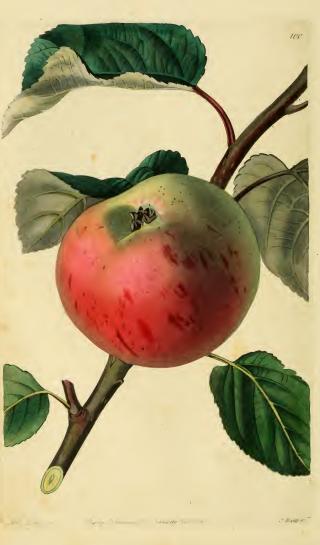
The Pomological Magazine: or Figures and descriptions of the most important varieties of fruit cultivated in Great Britain.
Volume No. 1
Editor: John Lindley.




 UnitedStatesofCider